

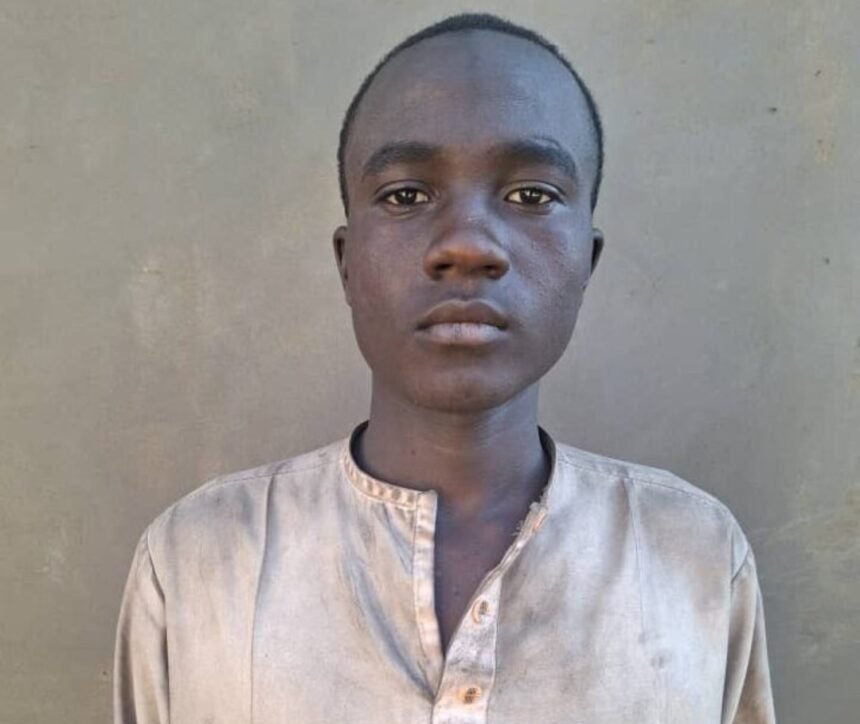
A suspected Boko Haram suicide bomber, Ibrahim Mohammed, has disclosed how he was recruited and paid to carry out deadly attacks on worshippers in Maiduguri.
Ibrahim made the confession after his arrest by troops of Operation HADIN KAI, working alongside local hunters in Yobe State. He admitted responsibility for the December 24 suicide bombing at the Gamboru Market Mosque, which claimed five lives and left 32 others injured.
According to him, the attack was directed by Boko Haram commanders operating between Adamawa State and the Mandara Mountains. He told investigators that he travelled to Maiduguri with two improvised explosive devices (IEDs) under instructions from leaders identified as Adamu and Abubakar, with Izala Mosque listed as the primary target.
Ibrahim said the explosives were planted after Zuhur and Asr prayers and timed to explode during Maghrib prayers, when worshippers were expected to be at the mosque.
In a disturbing revelation, he claimed he later returned to the scene disguised as a civilian, helping to evacuate victims after the explosion. He further disclosed that suicide bombing had become a paid task within the terror group, with operatives receiving between N70,000 and N100,000 per mission.
Expressing remorse, he said: “I regret my action for killing innocent people who did not commit any crime.”
The suspect also revealed that he was part of a wider terror network planning multiple attacks across the North-East, involving Jama’atu Ahlis Sunna Lidda’awati wal-Jihad (JAS), Ansaru, and JNIM elements. He identified a notorious IED expert, Munzir Abu Ziyadah, as a key coordinator of up to ten suicide missions from the Ali Ngulde camp.
After the Gamboru attack, Ibrahim said he carried out reconnaissance missions in Yobe State and attempted to carry out another bombing near Izala Mosque in Tashan Joni, but was unable to proceed due to heightened security.
Following his confession, security forces have intensified patrols and surveillance around mosques, markets, and other vulnerable locations across the North-East. Authorities say the information provided has offered critical insight into Boko Haram’s recruitment, funding, and operational tactics, reinforcing the importance of intelligence-led operations and community vigilance in the region.