

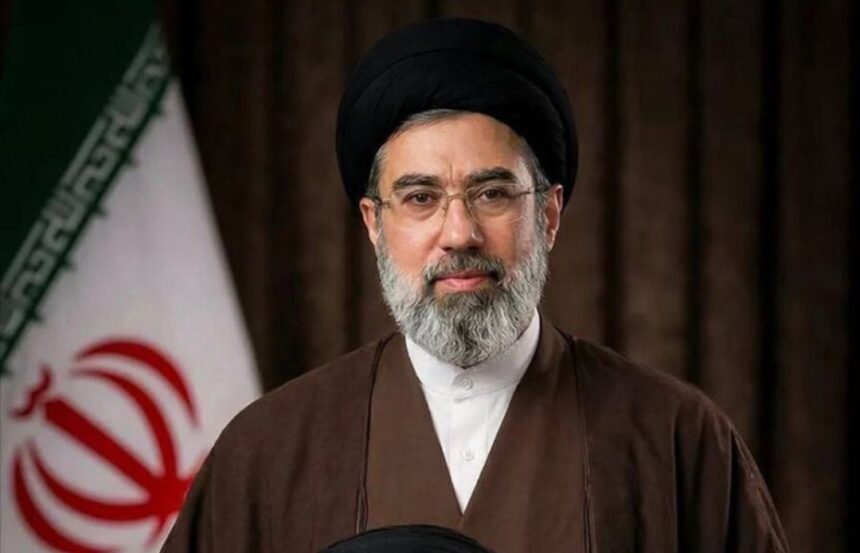
Mojtaba Khamenei has emerged as Iran’s new supreme leader following the assassination of his father, Ali Khamenei, during the first wave of joint US-Israel strikes on the Islamic Republic.
The 56-year-old cleric was announced as the country’s new leader after a vote by the Assembly of Experts, the clerical body responsible for appointing Iran’s highest authority. His emergence marks the first time in the history of the Islamic Republic that a son has directly succeeded his father as supreme leader.
He becomes Iran’s third supreme leader, after his father and Ruhollah Khomeini, who led the country after the Iranian Revolution of 1979 that established the current theocratic political system.
In Iran’s political structure, the supreme leader holds the ultimate authority over state affairs, including the military, judiciary, and key national policies, ranking above the president.
A powerful figure behind the scenes
Born on September 8, 1969, Mojtaba Khamenei spent most of his political life operating behind the scenes. Though he never held an official government position, he was widely regarded as a powerful gatekeeper within his father’s office and a key political and security adviser.
He studied Islamic theology in the seminaries of Qom and built close ties with conservative clerical networks and security institutions. During the Iran–Iraq War, he reportedly served in the Habib Battalion linked to the Islamic Revolutionary Guard Corps (IRGC).
Over the years, Mojtaba developed strong relationships within the IRGC and its affiliated organisations, including the Basij Resistance Force, both of which play a central role in Iran’s internal security and regional strategy.
Sanctions and controversies
In 2019, the United States Department of the Treasury imposed sanctions on Mojtaba Khamenei, accusing him of representing his father in an unofficial capacity while helping to advance policies that Washington described as destabilising in the region.
US authorities alleged that he worked closely with the IRGC’s external operations wing, the IRGC Quds Force, as well as the Basij militia.
Questions over religious standing
Despite his political influence, Mojtaba Khamenei’s elevation has raised questions among observers because he does not hold the clerical rank of ayatollah, a title typically associated with senior scholars of Islamic jurisprudence.
Iran’s constitution traditionally requires the supreme leader to possess deep religious scholarship. However, a constitutional amendment before the death of Ruhollah Khomeini allowed a lower-ranking cleric to assume the role — a change that enabled Ali Khamenei himself to become supreme leader in 1989.
A challenging moment for Iran
Mojtaba Khamenei assumes leadership at a critical moment as Iran confronts escalating military tensions with the United States and Israel, mounting economic pressures, and strained relations with neighbouring states. His leadership will likely shape the country’s domestic politics and regional strategy in the coming years.