

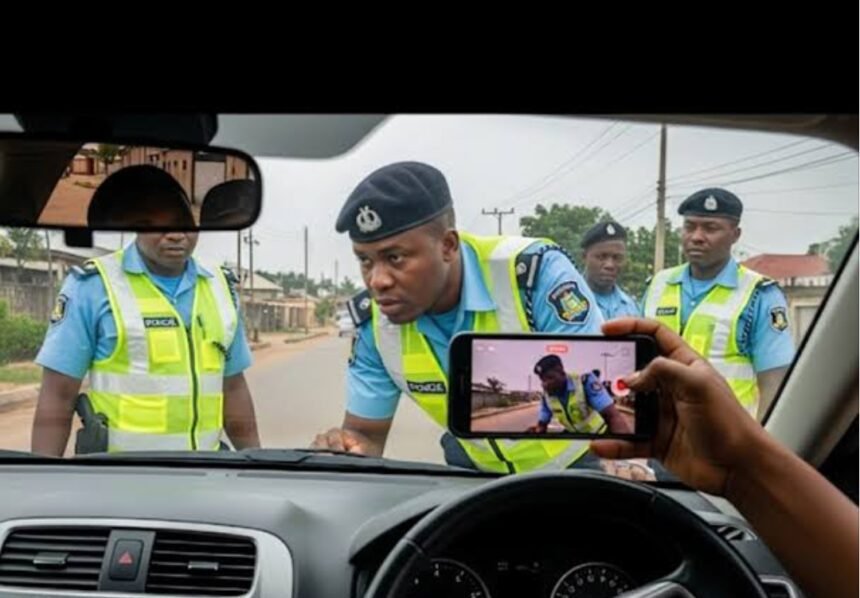
A Federal High Court in Delta State has ruled that Nigerians are legally entitled to record police officers while they carry out stop-and-search operations in public spaces.
The decision, delivered by Justice Hyeladzira Nganjiwa, followed a fundamental rights suit filed by lawyer Maxwell Nosakhare Uwaifo, who challenged the conduct of police officers during a roadside encounter in May 2025.
Uwaifo told the court that he was stopped by unidentified officers along the Sapele roundabout while travelling from Benin to Warri. He alleged that the officers acted aggressively and appeared to be engaging in harassment or extortion. When he attempted to record the interaction, he was threatened and forced to stop. According to him, the officers neither wore name tags nor identified themselves, and operated in an unmarked vehicle.
In its ruling, the court declared that citizens have a constitutional right to document the activities of law enforcement officers performing public duties. It further held that “anonymous policing” is unconstitutional, stressing that officers must display visible name tags, force numbers, or proper identification during operations.
The court also ruled that it is unlawful for police officers to harass, intimidate, arrest, or seize devices from individuals who are recording them in public.
Additionally, the judge ordered that relevant authorities issue clear directives and guidelines to ensure compliance, including disciplining officers who violate these rights.
The court awarded ₦5 million in damages for the violation of the applicant’s fundamental rights and ₦2 million as the cost of litigation.