
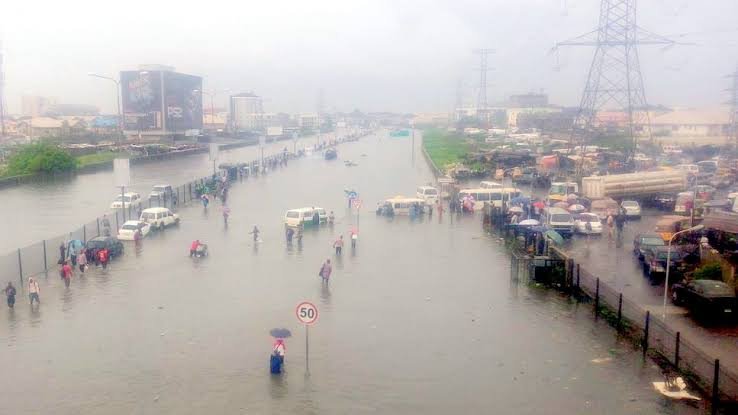
The Director-General of the Nigeria Hydrological Services Agency (NiHSA), Umar Mohammed, has warned that the recent flooding witnessed in Lagos and other parts of the country marks only the beginning of what could be a prolonged and more severe flood season.
According to him, NiHSA accurately predicted the flooding through its forecasting models, but its warnings were largely ignored. He cautioned that flooding could persist for the next 12 weeks, with the most severe impact expected between August and September if urgent preventive measures are not taken.
Mohammed explained that Lagos is particularly vulnerable because it faces three types of flooding simultaneously—urban, riverine, and coastal flooding. He noted that blocked and silted drainage systems, combined with the state’s low-lying terrain and rising water from the Ogun River, have significantly worsened the situation.
He also raised concerns that prolonged flooding could contaminate boreholes and other sources of drinking water, prompting the agency to monitor water quality before and after the floods to assess possible health risks.
While expressing optimism that floodwaters should begin to recede gradually from October, the NiHSA boss warned that flooding is expected to continue intermittently until then, with safer conditions likely only by November.
Mohammed further lamented what he described as poor cooperation from many state governments, saying annual flood forecasts and early warnings issued by the agency are often ignored until disasters occur.