

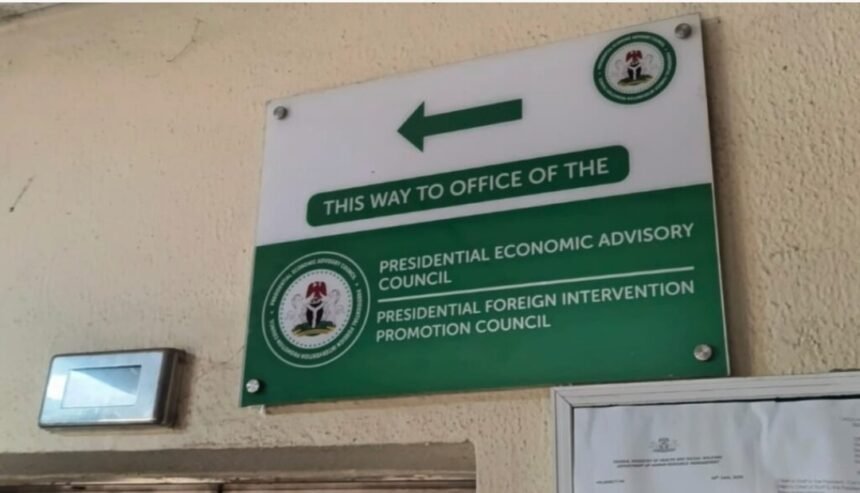
The Senate is expected to address the growing controversy surrounding the N1.3 billion allocation to the disputed Presidential Foreign Intervention Promotion Council (PFIPC) when plenary resumes on Tuesday, amid fresh revelations that a forged appointment letter allegedly enabled the council to operate from the Federal Secretariat in Abuja for more than a year.
Multiple Presidency and civil service sources familiar with the matter said the controversy stemmed from a forged appointment letter purportedly bearing the signature of the President’s Chief of Staff, Femi Gbajabiamila. The document, which officials now describe as fake, was reportedly accepted by the Civil Service Headquarters without proper verification, allowing Prince Adeniyi Adeyemi Mathew to secure office accommodation at the Federal Secretariat and present the PFIPC as a legitimate government agency.
According to the sources, the failure of several institutions—including the Civil Service Headquarters, the Budget Office and the National Assembly—to carry out adequate due diligence allowed the alleged fraud to spread across government agencies, diplomatic missions and private organisations.
Investigations further revealed that the controversial N1.3 billion budget allocation was approved without Adeyemi or any representative of the PFIPC appearing before the Senate Committee on Establishment and Public Service to defend the proposal.
A National Assembly source disclosed that the allocation was inserted alongside other Presidency-related budget items, thereby avoiding separate scrutiny.
“It was not brought in as a stand-alone item. It came collectively with other items from the Presidency, so there was no independent defence or oversight. The Senate leadership is expected to address the matter on Tuesday amid growing public concerns,” the source said.
Presidency officials explained that the forged appointment letter violated the established constitutional procedure for appointing heads of agencies. They noted that appointments to agencies under the Presidency are made by the President, with appointment letters issued by the Secretary to the Government of the Federation (SGF), not by the Chief of Staff.
One Presidency official explained that every presidential appointment follows a formal process in which the SGF prepares a memo for presidential approval before an appointment letter is issued. In cases involving ministries, the approved appointment is transmitted through the relevant minister and permanent secretary before reaching the appointee.
Officials alleged that Adeyemi exploited this bureaucratic gap by presenting a forged letter allegedly signed by the Chief of Staff to request office accommodation. Because civil servants typically rely on the appointment letter without demanding the accompanying presidential approval documents, the request was reportedly processed without questioning the authority of the Chief of Staff to make such appointments.
A senior civil servant familiar with the investigation said the allocation of office space at the Federal Secretariat became the turning point in the alleged fraud.
According to the official, once office accommodation was secured within the Federal Secretariat, the PFIPC gained the appearance of legitimacy, enabling it to receive visitors, operate with official letterheads and maintain a website, while few officials questioned its legal status.
The official disclosed that although the office was eventually sealed following Adeyemi’s arrest and reassigned to another government official, the suspect allegedly continued operating outside the Secretariat.
Another Presidency source revealed that the alleged fraud first came to the attention of government authorities after officials of the Nigerian Investment Promotion Commission (NIPC) raised concerns that the PFIPC was encroaching on the commission’s statutory responsibilities.
The matter was reportedly escalated to the Chief of Staff, who immediately denied any knowledge of Adeyemi or the council and alerted the Department of State Services (DSS), leading to investigations and Adeyemi’s eventual arraignment.
The source, however, acknowledged that the case lost momentum after the initial arrest, allowing the controversy to resurface months later.
Another official suggested that the PFIPC may have secured its budget allocation by exploiting institutional weaknesses within the National Assembly, where frequent changes in committee membership may have reduced institutional memory.
According to the source, the combination of an office at the Federal Secretariat, official stationery and other symbols of government authority created sufficient credibility