

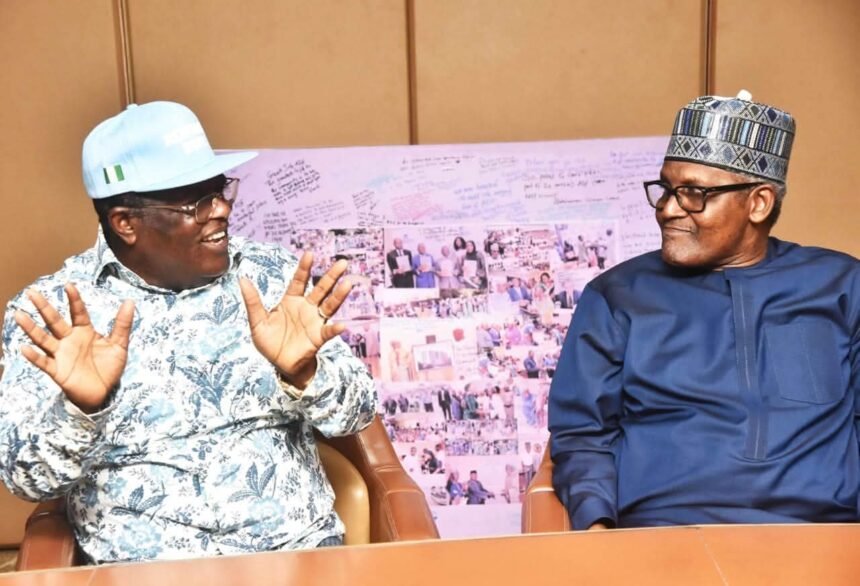
Fresh details have emerged from a high-level meeting between the Federal Ministry of Works, members of the National Assembly Committees on Works and Chairman of the Dangote Group, Aliko Dangote, following allegations that the Lagos-Calabar Coastal Highway contributed to the recent flooding experienced in parts of Lagos.
The meeting came after President Bola Ahmed Tinubu directed the Minister of Works, David Umahi, to carry out an inspection of the highway project and ascertain the cause of the flooding.
Speaking after the inspection, Umahi dismissed claims that the Lagos-Calabar Coastal Highway was responsible for the flooding, saying comprehensive engineering assessments found no evidence linking the project to the incident.
According to the minister, the flooding was largely caused by indiscriminate dumping of refuse into drainage channels, blockage of natural waterways and the increasing impact of climate change. He maintained that the management of urban drainage infrastructure falls under the responsibility of the Lagos State Government and urged residents to stop practices that obstruct water channels.
Umahi reiterated that the coastal highway was designed with adequate drainage infrastructure and environmental safeguards to withstand heavy rainfall, insisting that the project complied with established engineering standards.
The meeting also provided insight into the challenges confronting Nigeria’s manufacturing sector. Dangote disclosed that cement production is significantly less profitable than many people assume because of rising production costs, unstable foreign exchange rates and the enormous capital investment required to establish and operate integrated cement plants.
He explained that manufacturers purchase most critical machinery and equipment in foreign currencies but are compelled to sell their products in naira, exposing them to exchange rate losses and shrinking profit margins.
Dangote also highlighted the burden of providing independent power infrastructure for cement production, describing it as one of the major costs of doing business in Nigeria. He called for improved access to long-term financing and urged the country to adopt global best practices that would accelerate the delivery of major infrastructure projects.
Umahi commended the Dangote Group for its contribution to the Lagos-Calabar Coastal Highway, describing the collaboration as a successful example of public-private partnership capable of accelerating infrastructure development across the country.
The meeting ended on a symbolic note with Dangote inviting Umahi, members of the National Assembly Committees on Works and other members of the federal delegation to visit the Obajana Cement Plant in Kogi State, Africa’s largest cement manufacturing facility.
The visit, he said, would provide first-hand insight into the scale of investment required to sustain local manufacturing and reaffirm the Dangote Group’s commitment to supporting Nigeria’s infrastructure development and industrial growth.