

he Arewa Cohesion for Peace, Unity and Development Initiative (ACI) has warned journalists against publishing unverified, inflammatory, and sensational reports that could undermine public confidence during in the 2027 General Elections.
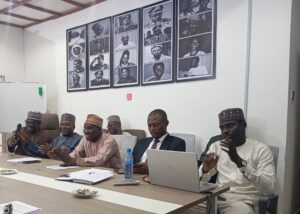
ACI Director-General, Malam Abdullahi Idris, made the call on Wednesday at a workshop in Kaduna.
The workshop, organised for 30 journalists, focused on electoral law, fairness and objectivity, fact-checking, digital verification, conflict-sensitive reporting, hate speech, and responsible coverage of election-day incidents.
The News Agency of Nigeria (NAN) reports that the workshop is with theme: “Fair, Objective and Conflict-Sensitive Election Reporting: Strengthening Journalism for Credible Nigerian Elections.”
Idris said the media’s responsibility during elections goes beyond reporting events, stressing that the way information “is presented can influence” how citizens understand political developments and respond to electoral outcomes.
He said journalists must recognise that inaccurate reports, provocative headlines, and unverified claims can worsen existing social tensions, particularly in a diverse society such as Nigeria.
According to him, the increasing use of social media, manipulated content, and artificial intelligence has made verification more important because false information can spread to large audiences within minutes.
The ACI director-general said the organisation organised the training as part of its mandate to promote peace, cohesion, good governance, citizen participation, dialogue, and peaceful coexistence.
Also presenting a paper, an Editor with African Prime News, Mr Joseph Edegbo, said the media has a critical responsibility to safeguard democratic participation by providing voters with truthful, verified and relevant information.
He said journalists should not allow political actors or powerful interests to determine what they reported, stressing that editorial decisions must be guided by public interest.
According to him, the media’s responsibilities during elections include voter education, campaign coverage, facilitating public debate, scrutinising the electoral process and reporting results accurately.
He said journalists should provide platforms for candidates and political parties to present their programmes, while also giving citizens the opportunity to question and engage political actors on issues affecting them.
Edegbo warned that political capture could undermine the independence of the media when governments, politicians or powerful groups influence editorial decisions.
He urged journalists to maintain professional distance from politicians and apply rigorous ethical and editorial standards in their work.
“Journalists should constantly ask whether a story serves the public good rather than a political agenda,” he said.
He also stressed that impartiality did not mean giving equal weight to every claim, but ensuring that relevant perspectives were fairly represented while allowing evidence to determine the credibility of competing claims.
Edegbo said journalists must separate facts from allegations and avoid presenting unverified claims as established facts.
Similarly, in his presentation on objectivity in election reporting, Malam Garba Muhammad, a former National President of the Nigerian Union of Journalist (NUJ), urged journalists to allow evidence, verification and professional judgment to guide their reports.
“Report what you know. Verify what you can. Clearly identify what remains unverified,” he said.
Muhammad cautioned against assuming that claims trending on platforms such as Facebook, X, TikTok and WhatsApp were automatically factual.
He urged journalists to cross-check viral claims with official records, primary sources and independent evidence before publication.
He also drew a distinction between equal opportunity and false balance, explaining that while candidates should be given reasonable opportunity to present their views and respond to allegations, journalists should not present two opposing claims as equally credible when available evidence clearly supports one.
“Be fair to people; be rigorous with facts,” he said.
Muhammad advised journalists to move beyond simply reporting statements made by politicians and focus on what their policies, promises and records meant for voters.
He said campaign promises should be examined in terms of their feasibility, cost, funding, evidence and measurable targets.
He also warned journalists against turning party press releases into ready-made news reports, saying such materials should be treated as sources requiring independent scrutiny.
On the reportage of electoral disputes, Muhammad stressed the importance of the right of reply.
He urged journalists to identify serious allegations, contact those affected and accurately report their responses, while making clear when attempts to obtain a response had been unsuccessful.
The speaker further cautioned against declaring election winners based on incomplete results, party claims or social media projections.
He said journalists must distinguish between polling-unit results, collated results, party projections, unofficial figures and official declarations by the appropriate electoral authority.
“Reporting results is not the same as declaring a winner,” Muhammad said.
He advised journalists to verify result sheets, cross-check figures and clearly identify the status and source of every result reported.
Muhammad urged reporters to avoid ethnic, religious and regional generalisations and to exercise caution when reporting incidents involving rival political groups.
Other speakers advised journalists reporting election-related violence to prioritise verified facts, confirmed casualties, locations and statements from credible authorities, while explaining the human and security implications.
The speakers also cautioned against the use of inflammatory or loaded language in headlines and reports.
They said allegations should be attributed to their sources rather than presented as facts, and headlines must accurately reflect the evidence contained in the story.
They urged journalists to verify photographs and videos by establishing when and where they were taken, identifying persons shown and checking whether the material had been manipulated or taken out of context.
The facilitators said professional standards must apply equally to traditional media reports and journalists’ activities on social media.
They urged journalists to “stop, check, verify, attribute and contextualise” before sharing election-related information online.
The speakers said the ultimate responsibility of election journalists was not merely to report events, but to help citizens understand the electoral process, distinguish fact from propaganda and participate peacefully in democracy.
They stressed that public trust remained the media’s most valuable asset and urged journalists to protect it by maintaining independence, accuracy, fairness and accountability throughout the electoral cycle.