

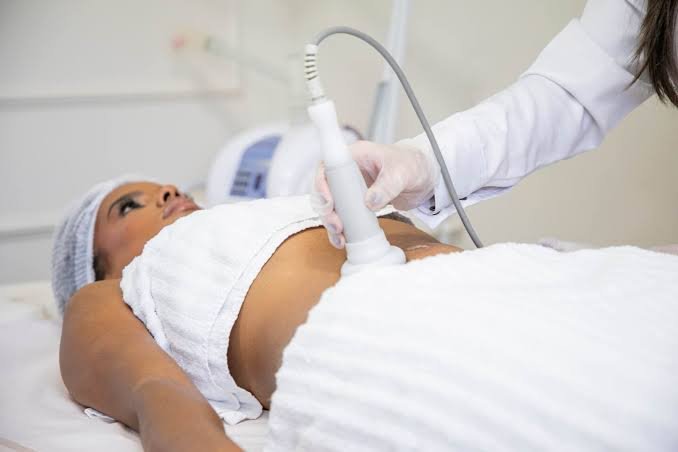
About 1,000 Nigerian women with uterine fibroids have undergone High-Intensity Focused Ultrasound treatment without surgical incisions, stitches or the blood loss associated with conventional surgery.
The milestone was disclosed by the Managing Director of Nordica Fertility Centre and Fibroid Care Centre, Dr Abayomi Ajayi, following the completion of the centre’s 1,000th HIFU treatment.
HIFU is a non-invasive procedure that uses focused ultrasound energy to target and destroy fibroid tissue deep within the body while preserving surrounding structures.
Ajayi said the achievement demonstrated that advanced medical technology could be introduced and successfully deployed in Nigeria while giving women more treatment options.
He said HIFU was now available in 37 countries and had been used to treat hundreds of thousands of women with fibroids and adenomyosis globally.
According to him, Nordica introduced ultrasound-guided HIFU for fibroid treatment in Nigeria in 2021, becoming the first dedicated HIFU facility for fibroid treatment in Nigeria and West Africa.
Ajayi explained that unlike procedures such as myomectomy and hysterectomy, HIFU does not require an abdominal incision or surgical removal of the fibroid.
“The energy generates heat that ablates the targeted fibroid tissue while surrounding structures are protected. The treated tissue is subsequently broken down by the body, and the fibroid progressively shrinks,” he said.
He noted that surgery remained an important and sometimes necessary treatment for fibroids, particularly myomectomy, but said it could involve risks associated with anaesthesia, bleeding, infection, postoperative pain, adhesions and recovery.
According to him, HIFU could be particularly valuable in a healthcare environment where access to safe blood products, specialist surgical expertise, operating theatres and postoperative care remains uneven.
However, Ajayi stressed that HIFU was not suitable for every woman or every fibroid.
He said treatment decisions should be based on individual factors, including the woman’s symptoms, the characteristics and location of the fibroid and her reproductive goals.
“Not every fibroid is suitable for HIFU, and not every woman needs the same treatment. That is why the future of fibroid care is not about replacing surgery with HIFU. It is about moving away from a one-size-fits-all approach and giving women access to a broader range of appropriate choices,” he said.
He added that fibroids could cause heavy menstrual bleeding, pain, pressure symptoms and, depending on their characteristics, reproductive difficulties.
Ajayi said the impact of fibroids often extended beyond physical symptoms, affecting women’s work, relationships, sexual wellbeing and overall quality of life.
Looking ahead, he called for increased investment in medical technology, stronger partnerships between Nigerian healthcare institutions and global centres of innovation, clinical knowledge transfer and more locally generated research.
He also urged Nigerian healthcare institutions to document treatment outcomes and train more clinicians to use advanced technologies.
“The most meaningful measure of progress will not be how many machines we import. It will be how much expertise we build around them, how much evidence we generate from them, and how many lives are improved because they are here,” he said.
Ajayi said the 1,000th treatment should therefore be viewed not only as a milestone for the centre but also as evidence that Nigerian patients could increasingly access advanced reproductive healthcare locally.
For women diagnosed with fibroids or adenomyosis, he said, the development meant they may have more treatment options than they previously believed.