
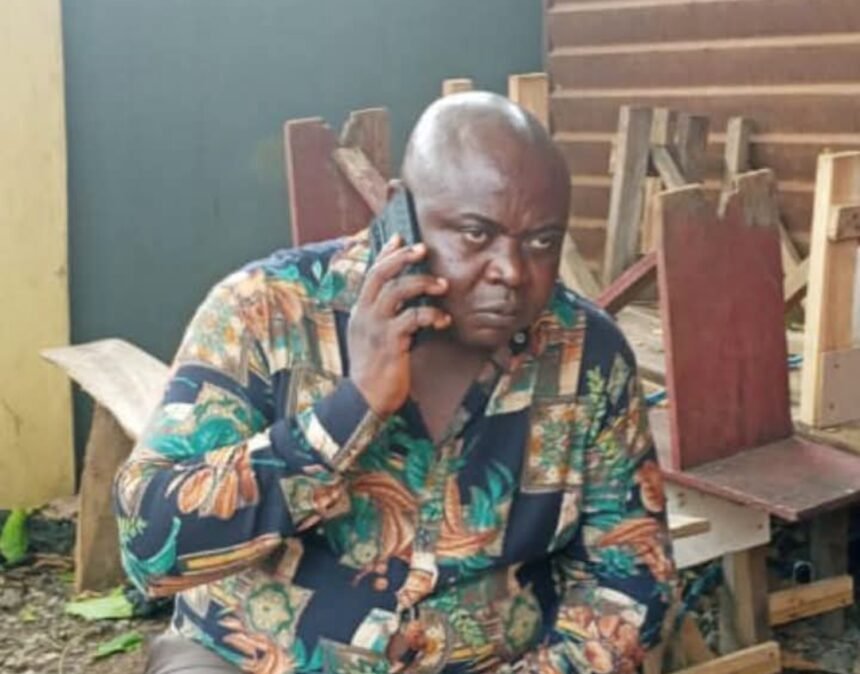
A Magistrate Court sitting in the Ojodu Abiodun Magisterial District of Ogun State has sentenced a businessman, Samson Okonkwo, to imprisonment with hard labour without an option of fine for selling counterfeit Coleman wires and cables.
Magistrate O.P. Mobee handed down the sentence on September 24, 2026, in Charge No. MOJ/138C/2025 between the Commissioner of Police and Okonkwo.
Okonkwo was arraigned on April 10, 2025, on a four-count charge bordering on conspiracy to forge Coleman wires and cable products, unlawful possession of forged products and selling products bearing forged Coleman marks.
The court was told that 317 coils of cables bearing Coleman wraps and labels were recovered from the defendant. Tests and physical comparisons reportedly established that the products did not originate from Coleman Technical Industries Limited.
The prosecution also presented evidence showing that although the seized cables were labelled as 2kg products, one of the recovered cables weighed 1.2kg, compared with 2kg for a genuine cable obtained from the Coleman factory. Differences were also established in the copper content and other identifying features.
In his defence, Okonkwo, a resident of 5 Oderinde Street, Akute, Ogun State, said he had been trading in electrical items for 20 years. He told the court that he purchased the cables from Alaba Market “and produced receipts for the purchases as exhibits.
The court, however, held that the prosecution had established the counterfeit nature of the products and that the defendant’s defence did not sufficiently rebut the evidence against him.
While sentencing him, Magistrate Mobee considered Okonkwo’s status as a first-time offender, family man and breadwinner, but noted the dangers posed by counterfeit electrical cables, including sparks, electrical fires and electrocution.
The magistrate said the sentence was intended to achieve retribution, deterrence and the protection of society before sentencing Okonkwo to imprisonment with hard labour without an option of fine.
Reacting to the judgment, the Managing Director and Chief Executive Officer of Coleman Technical Industries Limited, George Onafowokan, described the conviction as a major victory for the company, its customers and Nigeria.
Onafowokan said, to the best of his knowledge, it was the first time a person involved in the adulteration of electrical cables had been legally convicted in Nigeria, describing the judgment as evidence that cable counterfeiting was beginning to receive the criminal treatment it deserved.
He commended the Nigeria Police Force and the judiciary for supporting the company’s efforts to pursue the case, which he said lasted almost two years and involved raids and other enforcement actions.
According to him, the conviction showed that manufacturers could successfully challenge counterfeiters and protect their businesses, customers and employees.
Onafowokan, however, criticised the Standards Organisation of Nigeria (SON), alleging that the regulator had not provided sufficient support during the enforcement process.
He said that despite several raids, seizures and confiscations of adulterated cables over the years, there had been no corresponding criminal convictions capable of deterring offenders.
He contrasted this with the enforcement approach of the National Agency for Food and Drug Administration and Control (NAFDAC), arguing that tougher consequences had helped curb the circulation of adulterated drugs.
The Coleman CEO warned that counterfeit and substandard cables posed serious safety risks because they could be undersized, lack adequate fire-retardant properties and cause short circuits, potentially resulting in fires and loss of lives.
He called for stronger enforcement by SON, arguing that regulators should go beyond removing substandard products from the market to ensuring that offenders face criminal consequences.
Onafowokan also said Coleman had been compelled to finance enforcement operations and support legal proceedings to protect its brand, adding that such responsibility should ordinarily not fall on manufacturers.
He expressed appreciation to the Inspector-General of Police, IGP Olatunji Disu, and the police formations involved in the case, saying the conviction had demonstrated that the faking and adulteration of electrical cables could be pursued through the criminal justice system.