
Lagos’ child abandonment crisis: Babies rescued from dumpsites, streets as state records 1,437 cases
Lagos State is confronting a troubling child protection crisis, with babies and young children increasingly being found abandoned in streets, dumpsites, drainage channels and other dangerous environments across the metropolis.
From newborns discovered in cartons and refuse dumps to children allegedly abandoned because of poverty, superstition or family breakdown, the incidents have raised fresh concerns about the safety and welfare of vulnerable children in Africa’s largest city.
The scale of the problem is reflected in government records. The Lagos State Government says its Child Protection Unit handled 1,437 reported cases involving child abuse, trafficking, abandonment, neglect and other welfare-related issues during the period under review.
The Commissioner for Youth and Social Development, Mobolaji Ogunlende, disclosed the figure during the 2026 Ministerial Briefing in Ikeja in June.
He said the ministry also carried out 5,708 child protection interventions, covering rescue operations, investigations, counselling, legal support, rehabilitation, placement and psychosocial assistance for affected children and families.
Of the cases handled, 520 were successfully concluded through various disposition pathways.
Babies found in dangerous places
Several incidents recorded across Lagos this year illustrate the vulnerability of abandoned children.
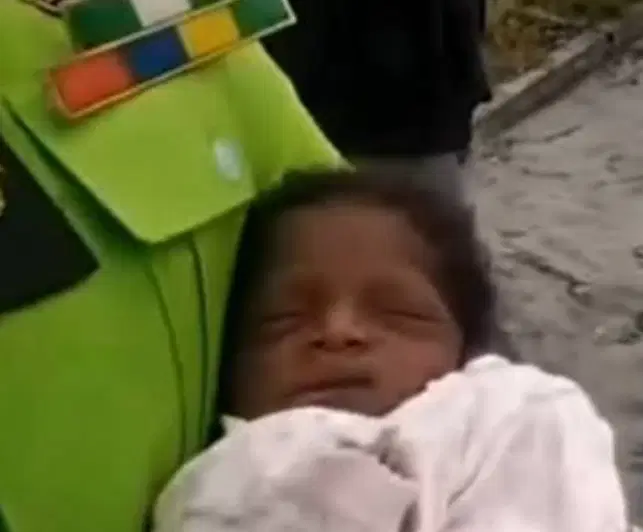
In March, a newborn boy was reportedly found abandoned near the Ladoje Canal in Agege. Market women and other residents who discovered the baby provided immediate assistance before handing him over to government authorities.
In April, residents in Ipaja raised the alarm after a three-year-old girl was allegedly abandoned in a malnourished and unhygienic condition. The child’s mother reportedly accused her of witchcraft.
The incident generated outrage, with residents calling for stronger measures against the abandonment of children on the grounds of superstition, as well as greater support for vulnerable families.
In May, police operatives reportedly intercepted an alleged child trafficking operation at Alafia Bus Terminal, Coker-Orile. Four children allegedly kidnapped from Ijesha-Tedo were rescued during the operation.
Another dramatic intervention occurred in July when officials working under the Lagos State emergency healthcare and LASHMA-AID initiative rescued an unconscious pregnant woman found on a city street.
She was taken to Lagos State University Teaching Hospital, where she received treatment and subsequently delivered a baby girl safely. State authorities later coordinated support for the mother and child.
Nursing mothers rescued from dumpsite
One of the most disturbing incidents occurred around an illegal dumpsite in Agboju, along the Lagos-Badagry Expressway.
Earlier in August, operatives of the Lagos State Environmental Sanitation Corps, popularly known as KAI, rescued four nursing mothers and their babies, including a nine-day-old infant, from the dumpsite.
The women and children were reportedly living in extremely unhygienic conditions, surrounded by refuse and exposed to environmental hazards.
The rescue highlighted not only the problem of child abandonment but also the precarious conditions in which some young mothers and their babies are forced to live.
On August 26, another vulnerable infant was rescued during an enforcement operation at the Alakija junkyard in Amuwo-Odofin.
The baby was reportedly found distressed amid the junkyard environment as enforcement officers and members of the public rushed to provide assistance.
The Corps Marshal of LAGESC, Major Olaniyi Cole (retd.), confirmed the rescue, saying the baby was taken to One Life Hospital in Bolade, Oshodi, for medical attention.
He said the child would be handed over to the appropriate authorities for further welfare support after being stabilised.
Residents express anger
The repeated discoveries have triggered anger, shock and concern among residents.
In Ilemba Awori/Ajangbadi, Ojo Local Government Area, residents reportedly found the body of a newborn boy inside a sack at a dumpsite on Ajakaiye Street.
A shop owner, Henry Alphonsus, who said he was the first person to discover the baby, described the act as “cruelty of the highest order.”
Another resident, identified as Mummy Uche, expressed disbelief over the circumstances surrounding the child’s death.
In Dolphin Estate, Ikoyi, residents also raised the alarm after discovering a newborn girl wrapped in a shawl and abandoned while crying.
A resident, Mrs Deborah, said the discovery was difficult to comprehend, particularly because the baby appeared to be in relatively good condition.
Residents contacted the police, after which the baby was taken to the Adeniji Adele Police Division.
Similar cases have been reported in Oko Oba, where a day-old baby was rescued on Oladejo Street after residents alerted the police, and in Orile, Apapa-Iganmu, where passers-by reportedly discovered a one-month-old baby near a petrol station.
Poverty, stigma and family breakdown
The growing number of incidents points to a complex combination of social and economic pressures.
Poverty, teenage pregnancy, stigma, family breakdown, inadequate support systems and harmful beliefs are among the factors that can place children and young mothers in vulnerable situations.
For some families, economic hardship may make it difficult to provide basic necessities for children. For others, teenage pregnancy, unwanted pregnancies or social stigma may contribute to abandonment.
The cases involving allegations of witchcraft also demonstrate how superstition can compound the vulnerability of children who are already dependent on adults for protection.
Calls for stronger intervention
The repeated rescues have renewed calls for stronger enforcement against child abandonment and trafficking, alongside expanded social welfare programmes for vulnerable families.
Residents and community leaders have also urged parents and guardians facing difficulties to seek assistance rather than abandon children in dangerous environments.
The Lagos State Government’s figures suggest that the problem extends beyond isolated incidents. With 1,437 reported child protection cases and 5,708 interventions recorded during the period under review, authorities are dealing with a significant and continuing child welfare challenge.
While each rescue represents a life saved, the growing number of cases raises a difficult question: how many vulnerable children remain unseen, unreported or beyond the reach of rescuers?
For Lagos, the challenge is therefore not only to rescue abandoned children but also to strengthen the social safety nets, family support systems and enforcement mechanisms needed to prevent children from ending up in the streets, dumpsites and other life-threatening environments in the first place.