

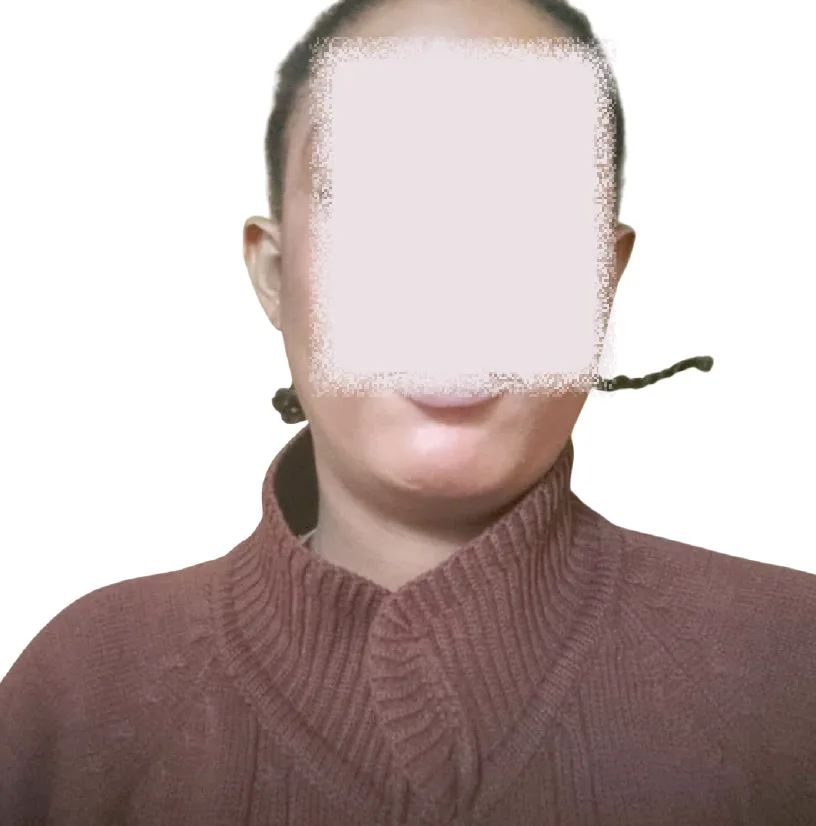
A 31-year-old graduate of Guidance and Counselling from Adekunle Ajasin University, Alade Omowumi, has appealed to Nigerians for financial assistance to undergo another surgery after living with a congenital reproductive condition for about 15 years.
Omowumi, who has endured years of severe abdominal pain, repeated surgeries and complications, said her condition had prevented her from menstruating normally and having sexual intercourse.
She explained that she first noticed something was wrong at the age of 15, when she began experiencing recurring abdominal pain lasting four to five days every month, despite never having menstruated.
After enduring the pain for about three years, she sought medical attention and was referred to a general hospital, where doctors told her that menstrual blood was accumulating internally because it could not flow out.
At 18, she underwent surgery, but doctors discovered that her vaginal canal was absent, making it impossible to proceed with the procedure as initially planned. She was subsequently scheduled for another operation to create a vaginal opening.
The surgery, performed on October 2, 2014, created an opening, but Omowumi said it later became too narrow for penetration. She attributed this partly to her inability to use a vaginal dilator after the operation because of the severe pain she experienced.
She also developed urinary incontinence after the surgery, with urine leaking uncontrollably following the removal of a catheter.
As her condition persisted, her menstrual blood continued to accumulate internally, causing her abdomen to swell. She said doctors periodically drained the accumulated blood whenever she visited the hospital.
The financial burden of treatment eventually forced her mother to request her discharge, with Omowumi leaving the hospital with a urine bag.
Despite plans for another operation, she said she became reluctant to return to the same hospital because she was dissatisfied with the outcome of the previous surgery and feared undergoing another unsuccessful procedure.
“I have lived with this condition for so many years, and there are things I would like to experience as a woman but can’t,” she said.
Omowumi disclosed that she later visited another hospital, where doctors assured her that further treatment was possible. According to her, the treatment involves repairing her bladder and creating a functional vaginal opening to allow menstrual blood to flow normally.
However, she said the procedures had to be performed in stages because of complications from the earlier surgery.
She underwent another operation in September 2026 to address her urinary problems and was discharged about one or two weeks before the interview. Doctors reportedly advised her to allow the operated area to heal before proceeding with the next surgery.
Although she has yet to receive a definite estimate for the remaining procedure, Omowumi said she needed financial assistance to continue her treatment.
She disclosed that a foundation had supported her before her most recent surgery, while its founder later sent her the remaining ₦500,000 for post-operative care.
However, she said contributions had slowed and the money available to her was insufficient to cover the next stage of treatment.
Beyond the physical pain, Omowumi said the condition had taken an emotional toll on her, particularly because she had kept it private for years out of fear of public judgment.
She recounted attempting sexual intercourse but stopping because of the unbearable pain, adding that she did not fully understand the reason for her experience at the time.
Her mother, whose husband is deceased, has remained her major source of support throughout the ordeal.
Omowumi said she eventually decided to speak publicly after reaching a point where she felt she could no longer continue suffering in silence.
“I was almost giving up. Sometimes, I would ask myself why I have to live like this and whether things would ever get better,” she said.
She added that public disclosure had exposed her to hurtful comments, forcing her to spend much of her time indoors. Nevertheless, she said she remained hopeful that people would look beyond the stigma and help her access treatment.
Many of her long-time friends, she said, were shocked to learn about her condition, with some expressing surprise that she had endured the experience for years without telling them.
Omowumi said doctors explained that her condition developed while she was in her mother’s womb but was not detected at birth. She only began to suspect that something was wrong when she experienced monthly abdominal pain without menstrual flow.
She is now appealing to Nigerians, organisations and philanthropists to support her financially so she can complete her treatment and pursue her dreams of marriage and motherhood.
“I want Nigerians to please help me. I want to live a normal life, get married and have children of my own,” she said.
“I have lived with this condition for many years, and I do not want to continue suffering. I need all the help I can get because I cannot do this alone.”