

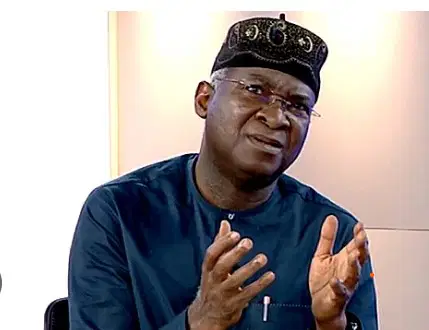
Former Lagos State Governor, Babatunde Fashola, has said the All Progressives Congress was caught off guard by Peter Obi’s victory in Lagos during the 2023 presidential election, declaring that the party would not allow a similar outcome in future elections.
Obi, who contested on the platform of the Labour Party, defeated the APC presidential candidate, Bola Tinubu, in his home state in what was one of the biggest surprises of the 2023 election.
Speaking in an exclusive interview with ARISE News, Fashola admitted that the APC did not anticipate losing Lagos, explaining that pre-election surveys had given the party little reason to believe the state was at risk.
“We were blindsided. It won’t happen again,” he said.
Asked whether the APC had taken Lagos for granted ahead of the election, the former governor dismissed the suggestion, maintaining that the party’s projections did not identify the state as a major battleground.
“Lagos didn’t look like a battleground at the time, not from the numbers,” he said.
Fashola explained that the party relied on scientific surveys which failed to capture the possibility of an opposition victory in the state.
“We do very scientific surveys, and Lagos didn’t look like a battleground in that sense. So that’s why I say I was blindsided, on reflection,” he added.
He, however, argued that the APC quickly recovered from the presidential election setback, insisting that subsequent electoral outcomes demonstrated that the party retained its political strength in Lagos.
“In spite of that setback at the presidential election, we turned it around very quickly,” he said.
Fashola also dismissed suggestions that Obi’s victory signalled a lasting erosion of the APC’s influence in the state, urging politicians to concentrate on presenting their records and policies rather than resorting to personal attacks.
Addressing concerns about voter intimidation, ethnic rhetoric and violence during the 2023 elections, the former governor maintained that political campaigns should be vigorous but free of threats, hate speech and attacks on opponents.
“You are entitled to very vigorously and vociferously campaign for your party, as I am doing now, and showing what our record is, without damaging anybody’s name, anybody’s reputation, and without hate speech,” he said.
He described democracy as a “non-contact sport”, arguing that political parties should compete through ideas, policies and performance rather than intimidation, violence or inflammatory rhetoric.