
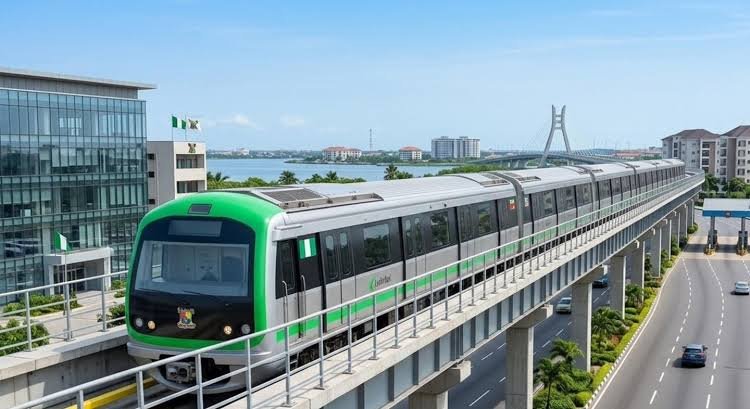
The Federal Government is targeting December for the groundbreaking of the long-delayed $3 billion Green Line rail project linking Lekki to Marina, as the Lagos State Government clarifies that the proposed railway will be dedicated to passenger transportation rather than cargo evacuation.
The Managing Director of the Nigerian Railway Corporation (NRC), Kayode Opeifa, disclosed the latest timeline at the BusinessDay Mobility and Logistics Conference in Lagos, saying construction could begin within the next two months.
The 70-kilometre rail line is expected to connect Marina through Victoria Island, Lekki and Ajah to the Lekki Free Trade Zone, providing an alternative to road transportation along the increasingly congested Lekki–Epe corridor.
However, Lagos State Commissioner for Transportation, Oluwaseun Osiyemi, said the state-backed Green Line was designed exclusively for passenger movement, contrary to expectations that it would also transport cargo from the Lekki Deep Sea Port and other industrial facilities in the area.
Speaking at the state government’s 2026 media parley, Osiyemi said the Federal Government might pursue a separate railway connection for cargo evacuation.
“The Green Line Rail project is for passenger movement, not cargo evacuation purposes,” he said.
He added that the Federal Government had plans to connect the area by rail, suggesting that the proposed federal railway could serve cargo transportation needs.
The distinction comes amid growing demand for efficient freight connections to the Lekki Deep Sea Port and the Lekki Free Trade Zone, both of which are expected to play significant roles in Nigeria’s maritime and industrial activities.
Funding and construction timeline
The Federal Executive Council approved contracts worth $2.99 billion in April 2026 for three railway projects, including Phase 1A of the Lagos Green Line, the Kano Metro City rail project and the Kaduna light rail system.
Finance Minister Taiwo Oyedele said the projects would be financed through the Ministry of Finance Incorporated, alongside counterpart funding arrangements.
The Green Line project also received budgetary allocations of N146.14 billion in the 2025 budget and N102.3 billion in the 2026 budget cycle.
Despite the latest projection, the project has experienced several missed deadlines. In April 2025, the Lagos State Government indicated that construction would begin before the end of that year, before announcing another expected commencement in December 2025.
In July 2026, the Lagos Metropolitan Area Transport Authority began an African Development Bank appraisal process for proposed financing, assessing the project’s environmental, social and institutional requirements.
China Harbour Engineering Company is the contractor for the project, following a tripartite agreement involving the company, the Lagos State Government and the Federal Government’s Ministry of Finance Incorporated.
When completed, the railway is expected to have 17 stations and carry up to 35,000 passengers per hour in each direction, with trains designed to operate at speeds of up to 100 kilometres per hour.
Lagos recruits 45 residents for call-up enforcement
Meanwhile, the Lagos State Government has recruited 45 residents of the Lekki axis to strengthen enforcement of its Electronic Call-Up System, following persistent difficulties controlling truck movements, particularly at weekends.
Osiyemi said enforcement had weakened when officials assigned to the area returned to their homes on the mainland to spend weekends with their families.
According to him, the distance between Lekki and where many enforcement officers reside had affected the consistency of operations.
The commissioner said the state planned to increase the number of locally recruited enforcement personnel to 100, adding that employing residents of the area would help address the lapses.
The Electronic Call-Up System regulates the movement of trucks and other articulated vehicles around the Lekki corridor, where port operations and industrial activities generate significant freight traffic.
The proposed recruitment expansion is expected to improve weekend enforcement and ease traffic disruptions along the corridor as the government pursues its wider transport infrastructure plans.