

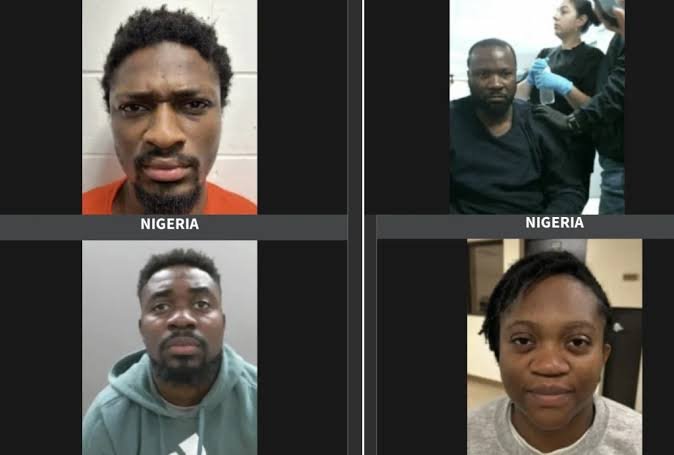
The United States Department of Homeland Security (DHS) has published the names and photographs of 124 Nigerians listed among foreign nationals facing deportation over criminal convictions as part of an updated immigration enforcement campaign under President Donald Trump’s administration.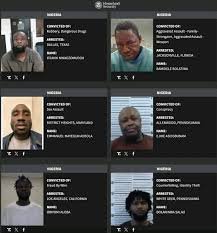
The disclosure was made on Wednesday on the DHS website under what the agency described as its “worst-of-the-worst” criminal register. While the names and photographs were released publicly, US authorities did not state when the affected Nigerians would be deported or provide individual details of the offences for which they were convicted.
According to DHS, the publication forms part of ongoing nationwide enforcement operations targeting non-citizens convicted of serious crimes.
“The U.S. Department of Homeland Security is highlighting the worst of the worst criminal aliens arrested by the U.S. Immigration and Customs Enforcement (ICE),” the agency said.
“Under DHS leadership, the hard-working men and women of DHS and ICE are fulfilling President Trump’s promise and carrying out mass deportations — starting with the worst of the worst — including the illegal aliens you see here.”
The list includes Sunday Adediora, Sunday Kunkushi, Mkpouto Etukudoh, Marcus Unigwe, Olaniyi Ojikutu, Boluwaji Akingunsoye, Ejike Asiegbunam, Emmanuel Mayegun Adeola, Bamidele Bolatiwa, Ifeanyi Nwaozomudoh, Aderemi Akefe, Solomon Wilfred, Chibundu Anuebunwa, Joshua Ineh, Usman Momoh, Oluwole Odunowo, Bolarinwa Salau and Oriyomi Aloba.
Others named are Oludayo Adeagbo, Olaniyi Akintuyi, Talatu Dada, Olatunde Oladinni, Jelili Qudus, Abayomi Daramola, Toluwani Adebakin, Olamide Jolayemi, Isaiah Okere, Benji Macaulay, Joseph Ogbara, Olusegun Martins, Kingsley Ariegwe, Olugbenga Abass, Oyewole Balogun, Adeyinka Ademokunla, Christian Ogunghide, Christopher Ojuma, Olamide Adedipe, Patrick Onogwu, Olajide Olateru-Olagbegi and Omotayo Akinto.
Also listed are Kenneth Unanka, Jeremiah Ehis, Oluwafemi Orimolade, Ayibatonye Bienzigha, Uche Diuno, Akinwale Adaramaja, Boluwatife Afolabi, Chinonso Ochie, Olayinka A. Jones, Theophilus Anwana, Aishatu Umaru, Henry Idiagbonya, Okechukwu Okoronkwo, Daro Kosin, Sakiru Ambali, Kamaludeen Giwa, Cyril Odogwu, Ifeanyi Echigeme, Kingsley Ibhadore, Suraj Tairu, Peter Equere, Dasola Abdulraheem, Adewale Aladekoba and Akeem Adeleke.
The publication further named Bernard Ogie Oretekor, Abiemwense Obanor, Olufemi Olufisayo Olutiola, Chukwuemeka Okorie, Abimbola Esan, Elizabeth Miller, Chima Orji, Adetunji Olofinlade, Abdul Akinsanya, Elizabeth Adeshewo, Dennis Ofuoma, Quazeem Adeyinka, Ifeanyi Okoro, Oluwaseun Kassim, Olumide Bankole Morakinyo, Abraham Ola Osoko, Oluchi Jennifer and Chibuzo Nwaonu, among others.
The latest action is part of the immigration measures introduced after Trump returned to office on January 20, 2025. On his first day back, he signed executive orders declaring illegal immigration a national emergency, strengthening border security and directing federal agencies to accelerate the arrest and removal of deportable migrants.
One of the orders, titled Protecting the American People Against Invasion, instructed immigration authorities to prioritise migrants considered threats to public safety and national security.
DHS said ICE officers had been directed to intensify operations nationwide against non-citizens convicted of serious offences, while White House Press Secretary Karoline Leavitt said the administration remained committed to enforcing immigration laws and removing undocumented immigrants with criminal records.
Official US immigration figures show that Guatemala has recorded the highest number of deportees since the renewed enforcement campaign began, followed by Honduras, Mexico and El Salvador. The United States has also expanded deportation flights to countries across Africa, Asia and the Caribbean.
Nigeria has also come under increased scrutiny by the Trump administration. In June, Washington imposed partial visa restrictions on Nigerian citizens, citing concerns over identity management, information sharing, visa overstay rates and security screening.
DHS said photographs and offence records of the affected Nigerians are available on its website, although no deportation timetable has yet been announced.