
President Bola Tinubu has approved a series of major road infrastructure projects across the country, including the reconstruction of the Lagos-Ibadan Expressway with reinforced concrete pavement and the extension of the Fourth Legacy Highway by an additional 400 kilometres.
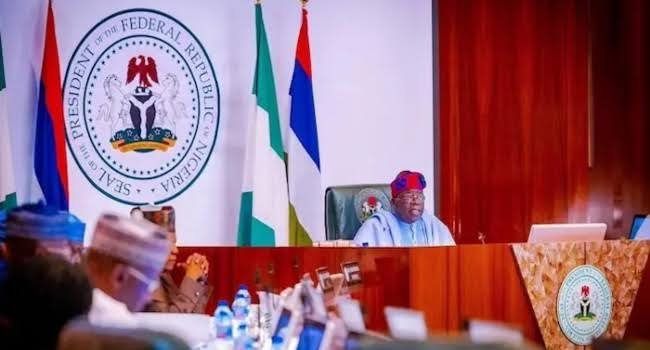
Minister of Works, David Umahi, announced the approvals during a media briefing in Abuja, describing them as another milestone in the Federal Government’s infrastructure renewal programme aimed at improving connectivity, boosting economic activities and promoting national integration.
Umahi said the President approved the extension of the Fourth Legacy Highway from about 700 kilometres to approximately 1,100 kilometres. The new stretch will pass through parts of Plateau and Taraba states, strengthening links between the North-Central and North-East.
He also disclosed that Tinubu approved the complete reconstruction of the Lagos-Ibadan Expressway using reinforced concrete pavement after sections of the road began failing less than five years after rehabilitation.
According to the minister, repeated repairs on the asphalt pavement have not provided a lasting solution. He said the new concrete pavement is expected to last between 50 and 100 years with minimal maintenance.
The President also approved the completion of the abandoned Ibi Bridge project in Taraba State, which was awarded in 2018 but stalled after reaching about 40 per cent completion. In addition, approval was granted for the construction of the 5.76-kilometre Lau Bridge across the Benue River in Taraba State.
Umahi further announced the approval of another 400 kilometres of dualised East-West Road stretching from Lokoja to Benin, saying the project would improve safety, facilitate trade and reduce travel time along one of the country’s busiest transport corridors.
The minister also revealed that the Lagos-Calabar Coastal Highway has been officially renamed the President Bola Ahmed Tinubu Coastal Highway, saying the Ministry of Works took the decision in recognition of Tinubu’s long-standing vision for the landmark project, first conceived during his tenure as Governor of Lagos State.
Providing updates on the 750-kilometre coastal highway, Umahi said work is progressing simultaneously across several sections. He noted that the 47.47-kilometre first section from Victoria Island to Eleko Village in Lagos has become a model for modern highway construction, while the second section from Eleko to the Lagos-Ogun boundary is about 60 per cent complete and is expected to be substantially completed by November, except for some complex bridge works.
He added that the corridor includes several mega bridges designed to accommodate heavy industrial traffic around the Dangote Refinery axis, with nine major bridges and flyovers in Section One and about 10 bridges in Section Two.
According to him, construction is also progressing on other sections in Cross River, Akwa Ibom, Ogun and Ondo states, while work continues on the Sokoto-Badagry Super Highway and the Trans-Sahara Highway.
Umahi said the Sokoto-Badagry Super Highway, a project conceived more than 50 years ago, will cut travel time between Sokoto and Lagos to about 10 hours when completed, while the Trans-Sahara Highway will significantly improve road connectivity between the South-East and the Federal Capital Territory.
He said the projects reflect the Tinubu administration’s commitment to delivering legacy infrastructure under the Renewed Hope Agenda through the adoption of more durable reinforced concrete pavement technology on strategic federal highways.