

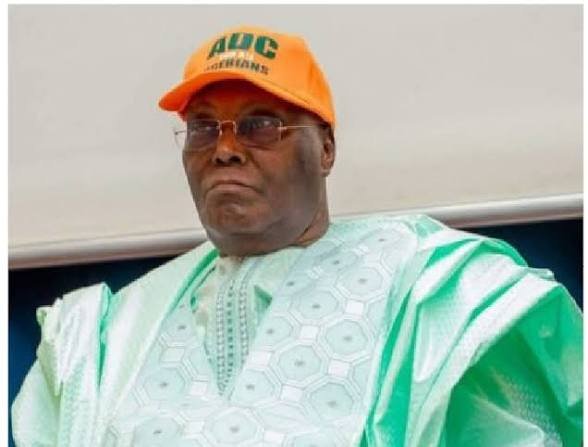
Former Vice President and African Democratic Congress (ADC) presidential candidate, Atiku Abubakar, has claimed that the Tinubu administration’s latest electricity policy reflects a decentralised power model he proposed more than two decades ago.
In a statement issued by his Senior Special Assistant on Public Communication, Phrank Shaibu, Atiku said the Federal Government’s recent acknowledgement that Nigeria can no longer depend solely on large, centralised power plants amounted to a delayed endorsement of his long-standing position on electricity generation.
He criticised the administration for increasing electricity tariffs before implementing reforms to improve power supply.
“It should not take a government three years in office to discover what was obvious more than two decades ago,” Atiku said, adding that the government should have fixed the power sector before asking Nigerians to pay higher tariffs.
The former vice president said that while serving between 1999 and 2007, he consistently advocated a diversified and decentralised electricity generation system powered by hydro, solar, gas and other energy sources.
He disclosed that he declined to chair the Power Sector Reform Committee established by then-President Olusegun Obasanjo because he disagreed with its emphasis on gas-fired generation.
According to Atiku, billions of dollars were later invested in the policy without delivering the expected results. He added that although the National Assembly investigated the power sector reforms under the Obasanjo administration, he was not invited because he had declined to head the committee.
Atiku maintained that he had consistently promoted decentralised power generation throughout his presidential campaigns and in public engagements over the years.
He argued that reliable electricity is essential for industrialisation, job creation and economic growth, accusing the current administration of spending nearly three years “experimenting with the livelihoods of Nigerians.”
According to him, the government’s approach has left businesses struggling, manufacturers under pressure and households paying more for less electricity.
Atiku said that if elected president, an ADC administration would pursue a diversified electricity strategy, expand transmission infrastructure, strengthen distribution networks and encourage greater private sector participation to provide stable and affordable power across the country.