

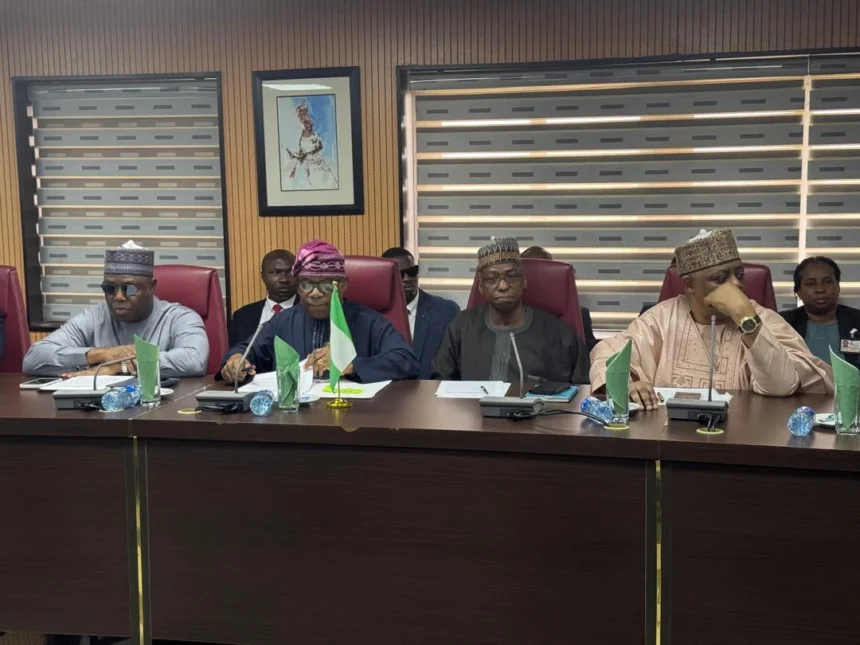
President Bola Tinubu on Monday declined to meet a special delegation sent by South African President Cyril Ramaphosa over the ongoing xenophobic attacks on Nigerians, directing the team instead to hold talks with the Minister of State for Foreign Affairs, Ambassador Sola Enikanolaiye.
The South African delegation, led by the country’s Minister of International Relations and Cooperation, Ronald Lamola, had sought an audience with Tinubu after arriving in Abuja on Friday with a message from President Ramaphosa.
Presidency sources said the delegation initially requested a meeting upon arrival but had no prior appointment. Although they were asked to return on Monday, Tinubu later instructed them to engage with Enikanolaiye, who would brief him on the outcome of the discussions.
The decision comes amid heightened diplomatic tensions between Nigeria and South Africa following renewed xenophobic attacks that have targeted Nigerians and other African nationals, forcing hundreds of Nigerians to return home.
Receiving the delegation in Abuja, Enikanolaiye said Tinubu mandated him to explore ways of resolving the crisis and preserving the longstanding relationship between both countries.
He condemned the recurring attacks on Nigerians, noting that similar incidents had occurred over several decades, and said nearly 100 Nigerians had been killed in hate-related attacks since 2022.
While stressing that Nigeria does not defend criminality, the minister insisted that anyone accused of crimes should be prosecuted through due process rather than subjected to mob violence. He also expressed concern over what he described as the apparent inability of South African security agencies to prevent the attacks.
Enikanolaiye recalled the emotional evacuation of Nigerians who lost loved ones, businesses and property during previous outbreaks of violence, describing the humanitarian impact as devastating.
Responding, Lamola said President Ramaphosa had sent him to reaffirm South Africa’s rejection of xenophobia, racism and all forms of intolerance. He, however, maintained that his country would continue to enforce its immigration laws and tackle criminal activities within its borders.
Lamola added that migration remained a continental challenge requiring cooperation between African countries and expressed confidence that continued dialogue would help ease tensions and strengthen bilateral relations between Nigeria and South Africa.