
Scrap-metal scavengers, popularly known as “iron condemned” pickers, are increasingly targeting bridges, residential buildings, construction sites and other structures in Lagos, removing reinforcement rods, electrical cables and roofing materials for sale.
The development has raised concerns among residents, engineers and government officials over the potential weakening of buildings and public infrastructure.
The scavengers, armed with hammers, chisels and cutting tools, are no longer limiting their activities to exposed metal such as manhole covers, railings and streetlight cables. They now break into concrete pillars, foundations and slabs to remove embedded steel reinforcements.
In Festac Town and its environs, several structures were found to have been vandalised. Pastor Peter Asuquo said his church on First Avenue suffered structural damage after scavengers removed reinforcement rods from its supporting pillars and decking.
According to him, the church initially attributed a partial collapse to other causes and carried out repairs before discovering that the reinforcement at the rear of the building had been removed.
He said the vandals gained access to the largely inaccessible rear of the waterfront property and cut through the concrete to extract the rods.
An inspection of the building showed that visible reinforcement rods from parts of the decking and foundation had been removed.
Another building formerly occupied by Standard Chartered Bank in the area was also found to have suffered extensive vandalism. Electrical wiring had been ripped from walls after vandals broke conduit pipes, while roofing sheets, aluminium windows and iron doors had also been removed.
A resident, Malaki Musa, said the vandals gained access through a section of the rear fence and removed the electrical cables while the occupants were away.
The scavengers also burn stolen electrical cables to recover copper, which is then sold to scrap dealers.
A suspected scavenger, Ibrahim Yainua, was reportedly caught cutting electrical wires at a car wash on First Avenue around 3am. He admitted that stolen wires and reinforcement rods were sold at scrap collection points.
Yainua said the wires were burnt to extract copper, which he claimed could fetch about N10,000 per kilogramme.
A scrap dealer identified as Mustapha said copper sold for between N8,000 and N12,000 per kilogramme at scrap markets around Festac and Old Ojo Road.
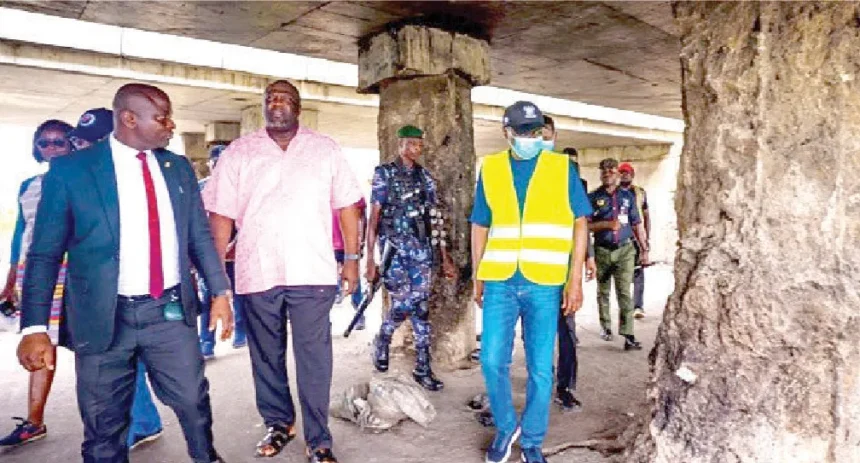
The most alarming cases were recorded around the Alakija-Festac Link Bridge, where scavengers living under the bridge were reportedly found digging into concrete pillars to remove reinforcement rods.
Evidence at the site showed cracks on some supporting pillars and portions of concrete that had been hacked away. The scavengers were also reportedly digging around the base of the bridge in search of metal and burning wires and other materials.
The Lagos State Government has condemned the development, with the Commissioner for Environment and Water Resources, Tokunbo Wahab, disclosing that 27 suspected vandals had been arrested in connection with the bridge vandalism.
Wahab said investigations indicated that the suspects removed iron rods, steel reinforcements, cables and other components considered important to the bridge’s structural integrity. He added that they would be prosecuted under the relevant state laws.
Governor Babajide Sanwo-Olu also condemned the vandalism, warning that the government would bring the full weight of the law against those involved, including buyers and sellers of stolen materials.
The governor, however, said the structural integrity of the Alakija-Festac Link Bridge remained intact despite the vandalism.
The Minister of Works, David Umahi, described the destruction of road infrastructure as “devilish,” “wicked” and unacceptable, urging Nigerians to protect public assets.
Structural engineer Lawrence Mbaunsi warned that removing reinforcement bars from load-bearing elements could compromise the structural integrity of buildings and other infrastructure.
He advised that any structure affected by such vandalism should undergo a professional assessment by qualified structural engineers before being declared safe.
Legal practitioner Emeka Ndukwe called for stricter regulation of scrap-metal activities in Lagos, including registration and licensing of legitimate operators and tougher sanctions for individuals and businesses that purchase materials stolen from public infrastructure.
The Lagos State House of Assembly had also raised concerns about the activities of scavengers. In January 2025, the lawmakers urged the state government to regulate scavenging and tackle the theft of manhole covers, bridge railings, streetlight cables and other public infrastructure.
Under Section 3 of the Miscellaneous Offences Act, 1984, the wilful destruction or removal of public property attracts severe penalties, including up to 14 years’ imprisonment in certain cases and up to 21 years where railway lines, electricity lines, telephone lines or public highway demarcation infrastructure are damaged or rendered dangerous.
The growing activities of the scavengers have therefore moved beyond ordinary scrap collection, with the destruction of structural components of buildings, bridges and drainage infrastructure posing a wider threat to public safety and government investment in infrastructure.
The Lagos State Commissioner for Information and Strategy, Gbenga Omotoso, described the attacks as “barbarism” and urged residents to remain vigilant and report suspicious activities around public facilities.