

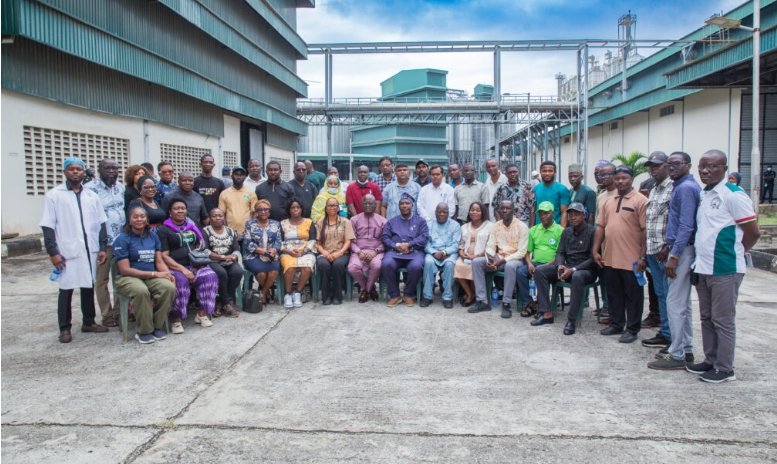
The Lagos State Government has trained rice millers and regulatory officials on rice biofortification as part of efforts to improve food security and enhance the nutritional quality of rice produced and consumed in the state.
The training, organised by the Lagos State Ministry of Agriculture and Food Systems, was held on Thursday at Imota, Ikorodu.
The programme focused on equipping participants with knowledge and skills needed to improve rice quality, strengthen production standards and promote the availability of nutritious fortified rice.
The Special Adviser to Governor Babajide Sanwo-Olu on Agriculture and Food Systems, Dr Oluwarotimi Fashola, said the state remained committed to increasing both the quantity and quality of locally produced rice.
Fashola said the workshop provided an opportunity for millers, regulators and other stakeholders to strengthen industry capacity and advance efforts to improve the nutritional value and quality of rice in Nigeria.
He said the Lagos State Rice Company Ltd., which produces Eko Rice Farm Fresh and Eko Rice Classic, had expanded its product line to include Eko Fortified Rice.
According to him, the fortified rice facility at the company’s mill was installed in December 2025 with support from development partners.
He listed the partners as TechnoServe, the World Food Programme, Partners in Food Solutions, the Global Alliance for Improved Nutrition, the Bill & Melinda Gates Foundation and DSM-Firmenich.
Fashola said the partners supported the installation of blending equipment, provided technical assistance, built the capacity of personnel and supplied fortified kernels.
He explained that consistent production of quality fortified rice required collaboration among millers, regulators, government agencies, laboratories, development partners and other stakeholders across the rice value chain.
The Special Adviser said the training was expected to translate into improved operational practices, regulatory compliance and stronger quality-control measures, ultimately providing consumers with safer and more nutritious rice.
He noted that Lagos, as a major rice-consuming and food-distribution centre, had an important role to play in promoting initiatives that improve food quality and nutrition.
Fashola urged participating millers to apply the knowledge gained from the workshop in their operations and encouraged stakeholders to share experiences, identify challenges and collaborate on practical solutions.
He also commended regulatory agencies for maintaining standards and protecting consumers, while appreciating development partners for their continued support of the state’s rice value chain.