
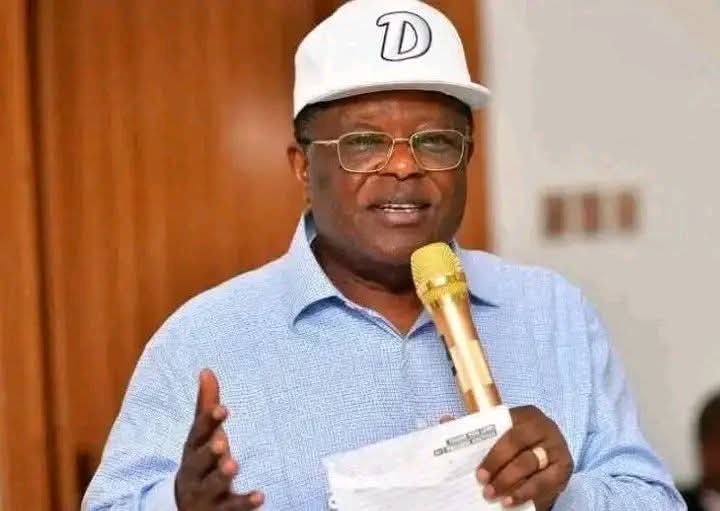
Minister of Works David Umahi has clarified that the Federal Government has no plans to alter the alignment of the Lagos-Calabar Coastal Highway, explaining that a proposed spur would connect the highway to the existing East-West Road.
Umahi made the clarification during an interview with Arise Television released on Friday, following controversy over his earlier statement that President Bola Tinubu had directed the government to divert the coastal highway through the existing East-West Road.
The minister had said in October that the directive was intended to avoid constructing a new highway alignment along the corridor from Ondo State through Edo State.
However, explaining the plan, Umahi said the word “divert” was a slip of the tongue, insisting that the original alignment would remain unchanged.
“The alignment is intact, but anybody saying that we should remove Edo State, we are not removing Edo State,” he said.
He added that the coastal highway would continue from Ondo into Edo State before proceeding along the coastal stretches of Delta and Bayelsa states.
“No, the word ‘divert’, you know, if I use that, then it’s a slip of the tongue. It’s to also put a spur. That’s the correct language, you know. It is connecting, and even if you say ‘to align’, you can say a spur,” Umahi explained.
According to him, the proposed spur would link the coastal highway to the East-West Road, providing motorists with an alternative route and improving connectivity along the corridor.
The minister also defended the planned reconstruction of the East-West Road, saying several sections had become vulnerable to flooding because their levels were below surrounding floodwaters.
He attributed the problem partly to climate change, noting that flooding had cut off some sections of the road about two weeks before the interview.
Umahi said the Federal Government planned to use reinforced concrete pavement in reconstructing the affected sections to improve their resilience and address recurring flooding challenges.