

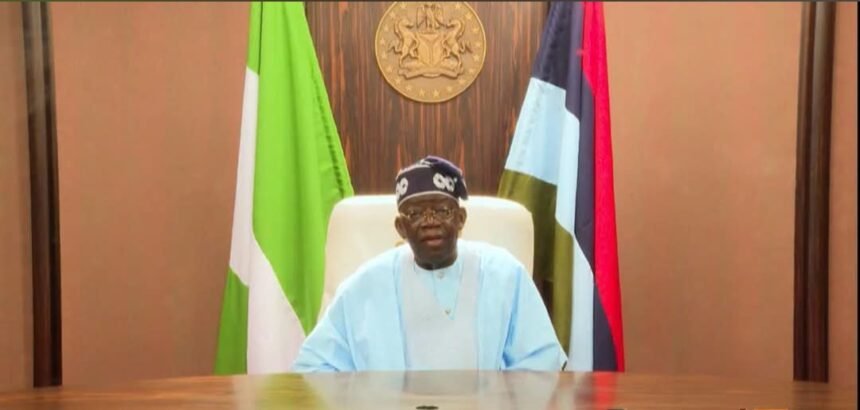
President Bola Tinubu has declared that Nigeria’s painful economic “treatment” is over, saying the country has moved beyond the era of difficult reforms and entered what he called the “age of prosperity.”
In a striking Independence Day address, Tinubu likened Nigeria’s economic challenges to cancer and said successive governments had for years relied on “morphine” rather than confronting the underlying problems.
“When this Administration assumed office, we resolved to do things differently. We chose to excise the cancer,” he said.
The President acknowledged that the reforms had brought real hardship but argued that abandoning them would amount to returning to the policies that created the underlying economic distortions.
He said the country had now reached a turning point after three and a half years of reforms.
“The emergency treatment is over. The foundation has been repaired. The central economic task before us has changed,” Tinubu said.
“Now, our purpose is simple: shared and widespread prosperity.”
He said the next phase would be judged by whether ordinary Nigerians experience improvements in their daily lives — including cheaper food and transportation, productive jobs, reliable electricity, better education and improved access to healthcare.
Tinubu said the government would pursue lower production and distribution costs by expanding mechanised agriculture, irrigation, storage and transportation while continuing investments in roads, railways and ports.
He also promised to use Nigeria’s gas resources to power industries, revive factories, expand digital connectivity and provide Nigerian businesses with infrastructure, skills and finance.
But the President admitted that millions of Nigerians were still struggling.
“Some Nigerian families still struggle today for the next meal, the next school fee, the next medical bill, or simply enough money to get to work,” he said.
He said government would continue social interventions, including direct support for poor households, education loans and consumer credit, while strengthening primary healthcare and basic education.
Tinubu said the ultimate goal was not to manage poverty but to defeat it.
“Our objective is not to manage poverty more efficiently. We will defeat it,” he declared.
He called on Nigerians to remain patient and committed to the reform process, saying prosperity would require sustained growth and millions of productive opportunities.
The President ended with an ambitious picture of Nigeria’s future, describing it as a “Promised Land” where prosperity is broadly shared and children can dream beyond the circumstances of their birth.
“The age of reform has done its work. Now begins the age of prosperity,” Tinubu said.