
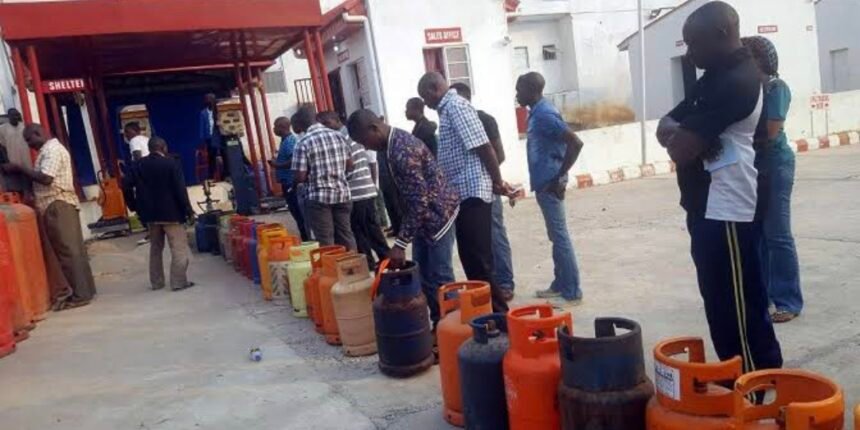
The cost of refilling a 12.5kg cylinder of Liquefied Petroleum Gas (LPG), popularly known as cooking gas, has surged sharply beyond ₦25,000 this week — up from ₦17,500 just a week ago — sparking concerns among households and retailers across the country.
At the moment, 1kg of LPG is being sold for between ₦1,500 and ₦2,500, depending on location, as supply shortages continue to strain the market.
Speaking on the development, the Executive Secretary of the Nigerian Association of Liquefied Petroleum Gas Marketers (NALPGAM), Mr. Bassey Essien, attributed the sudden price hike to disruptions in product distribution caused by the recent industrial action embarked upon by the Petroleum and Natural Gas Senior Staff Association of Nigeria (PENGASSAN).
“Dangote Petroleum Refinery is currently the highest local supplier of cooking gas in Nigeria,” Essien explained. “The crisis involving PENGASSAN scuttled distribution, and many dealers could not replenish their stocks during the period. What we are witnessing is simply a function of demand and supply. However, with the conflict now resolved, we expect supply to stabilise soon.”
Findings also revealed that many gas plants in Lagos and neighbouring areas were forced to shut down due to a lack of product, leaving consumers scrambling from one location to another in search of gas.
Recently, Aliko Dangote, President of the Dangote Group, disclosed that his refinery currently produces about 2,000 tonnes of LPG daily, with plans to increase output further to meet growing national demand. He also hinted that the refinery might sell directly to consumers if distributors fail to reduce prices, in a bid to encourage Nigerians to switch from firewood and kerosene to cleaner cooking options.
Before the refinery’s intervention, Nigeria’s LPG demand was largely met by the Nigeria LNG Limited (NLNG). In a recent report, NLNG reaffirmed its commitment to domestic supply, stating that since 2022, it has dedicated 100% of its Butane production — the main component of cooking gas — to the Nigerian market.
NLNG further disclosed that it supplies gas through approved coastal LPG terminals located in Lagos and Rivers States, with plans to expand to Delta State and other regions to improve accessibility and reduce costs for consumers nationwide.
With the combination of industrial disruptions, high demand, and limited distribution channels, consumers continue to feel the pinch of rising cooking gas prices — even as producers and regulators race to restore market stability.