

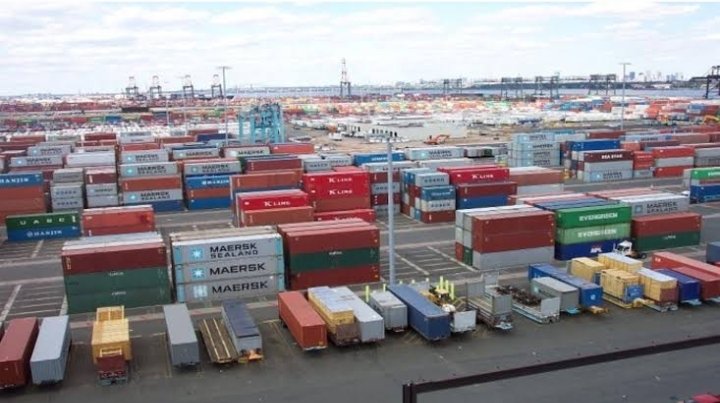
APM Terminals Apapa has unveiled a one-year roadmap aimed at transitioning from diesel-powered operations to cleaner and more sustainable energy sources, including gas, solar, and battery-powered solutions.
In a statement released on Monday, Terminal Manager Steen Knudsen explained that the move is part of the company’s broader commitment to decarbonisation and sustainability.
“As a company, we acknowledge that transition is not an overnight journey, and so we have designed a roadmap on how we move from the current state to the future state where our operations are fully decarbonised,” Knudsen said.
He revealed that within the next six to 12 months, the terminal will further reduce its carbon footprint through the deployment of an onsite solar power solution. This is expected to cut diesel consumption by up to 30 per cent and significantly enhance the terminal’s self-generation capabilities.
Earlier in July, the Nigerian government held a one-day decarbonisation summit to address policy, financing, and technological barriers to the country’s low-carbon transition. APM Terminals’ initiative aligns with this national agenda.
As part of its current efforts, APMT has commissioned two new compressed natural gas (CNG) generators with a combined 4MW capacity. These generators will shift the terminal’s energy reliance from diesel to gas, powering all reefer plugs, buildings, and lighting infrastructure.
“This shift to gas significantly reduces our emissions and sets the stage for future adoption of even more sustainable energy options,” Knudsen added. “We are integrating sustainable practices to boost efficiency while minimising environmental impact, as we target net-zero emissions by 2040.”
Chinyere Adenaike, Head of Procurement at APM Terminals Nigeria, reinforced the terminal’s goal of achieving full electrification and total reliance on renewable electricity for its operations.
“This vision can only be achieved through strong commitment and deeper collaboration with government and private investors, particularly to strengthen critical power infrastructure and introduce favourable policies,” she said.
She also noted ongoing engagements with key stakeholders, including the Nigerian Ports Authority, Transmission Company of Nigeria, local distribution companies, and renewable energy developers.
“Nigeria is blessed with abundant solar radiation, making it ideal for large-scale solar projects,” Adenaike concluded. “We are committed to leveraging this natural advantage to transform our terminal into a model of sustainable port operations.”