

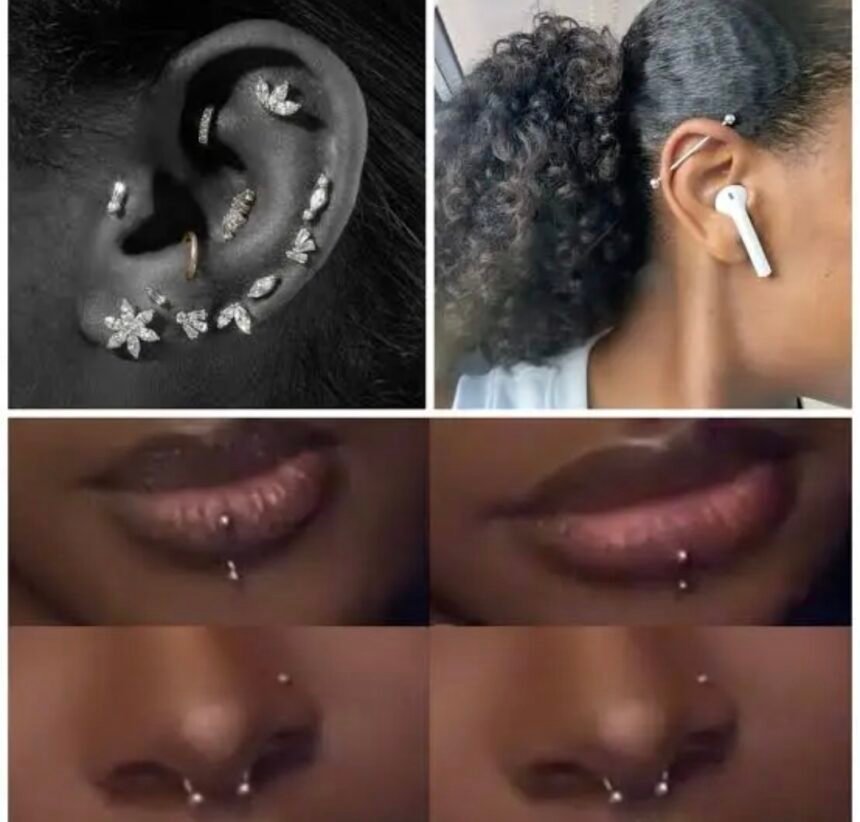
In today’s world, body piercings and tattoos have grown far beyond fashion. For many Lagos residents, they are marks of self-expression, rebellion, therapy, or confidence — each one carrying a personal story.
From nose rings to navel studs, what some see as trendy adornments are, for others, life-changing choices.
Pamela Oko, a 20-year-old student, said her piercings made her feel comfortable and beautiful. “It makes me feel good about myself,” she told NAN.
For 23-year-old salesgirl, Bimbo Adeola, the motivation is simple: “They look cute and enhance my appearance.”
But for upcoming musician, Jonn Steven (aka Siifa), piercings are part of the music culture. “My manager told me to get piercings, tattoos, and even braid my hair to look trendy. It’s part of how people identify what you do,” he explained.
Similarly, make-up artist and hairdresser, Amira Ogundele, 29, said her nose ring gives her a confidence boost. “What many see as a trend can actually empower someone deeply,” she said.
While opinions differ, music producer Peter Odibo, 33, dismissed claims that piercings affect how people are viewed socially or professionally. But teacher Eno Bassey disagreed, citing his sister’s experience of workplace discrimination.
“Piercings are a personal choice,” he argued. “They shouldn’t limit career opportunities or friendships.”
Music manager and social commentator, Alex Uwem, urged Nigerians to look beyond stereotypes. “For some, it’s fashion. For others, it’s therapy. Piercings and tattoos are stories carved into the skin — about pain, confidence, and survival,” he said.
He cautioned society against stigmatization, warning that harsh words could leave emotional scars. “We need deeper conversations, not judgment,” he added.