
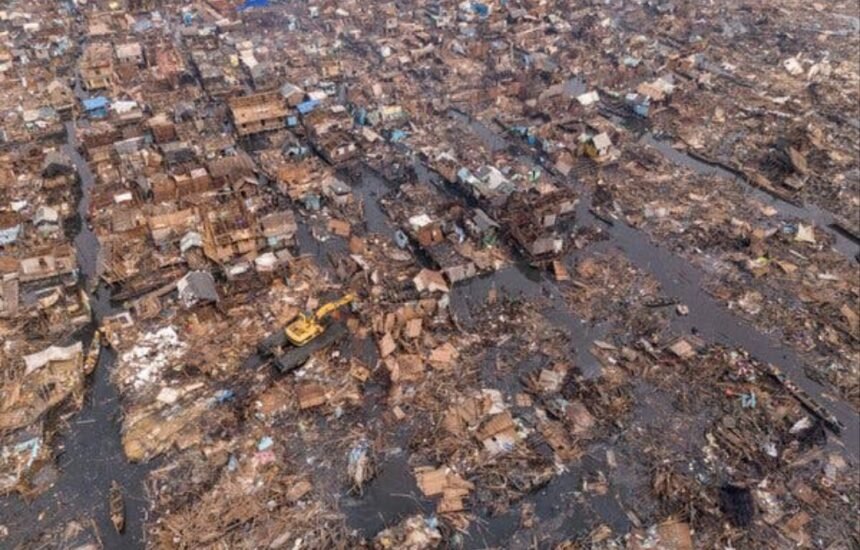
The rumble of amphibious excavators broke the fragile calm of Makoko just days before Christmas. Escorted by armed police, the machines tore through the lagoon settlement—often called Africa’s largest floating community—flattening hundreds of wooden homes perched on stilts above the water in the heart of Lagos.
What the authorities describe as the removal of illegal structures, residents and rights groups see as yet another chapter in Lagos’s long-running battle between the poor and powerful interests eyeing waterfront land. In the chaos that followed the demolitions, three people—two of them infants—reportedly died from the effects of teargas fired by police, according to human rights organisations.
For residents like 25-year-old teacher Alex Wusa, the operation erased an entire life in a single morning. Speaking from a canoe drifting through the debris, he said his home, shop, and the school where he taught were all destroyed. “They treated us like we are less than animals,” he said.
Makoko’s true population remains uncertain—estimates range from 80,000 to more than 300,000—but NGOs say over 30,000 people may have been displaced. Many families, including children, were left sleeping in canoes or under makeshift shelters, exposed to heavy rain and cold nights.
“This suffering is too much,” said fishmonger Iyabo Olaleye, whose two houses were demolished. “My children were soaked by the rain. I have nowhere to go.”
The community, which has existed for more than a century, is home to low-income earners who depend on fishing and informal trade. Despite its resilience and global attention from writers, architects and NGOs, Makoko has long been viewed by authorities as an eyesore rather than a neighbourhood deserving basic services like electricity, schools and paved access.
Lagos State officials insist the demolitions were necessary for safety and urban renewal, citing the danger posed by homes built within 100 metres of high-tension power lines crossing the lagoon. They say residents were warned months in advance—claims the community strongly disputes.
A coalition of NGOs argues that the clearances went far beyond the stated safety zone and accuse the government of colluding with powerful land-owning interests and private developers. Nearby, dredging machines were already reclaiming land, feeding suspicions that the demolitions are less about safety and more about prime real estate.
Makoko is no stranger to such trauma. Similar demolitions in 2005 and 2012 left scars that never fully healed; in 2012, a community leader reportedly died during a clearance operation.
As Lagos continues to expand, critics say the question remains unanswered: when waterfront communities are demolished, who exactly is the city being rebuilt for?