

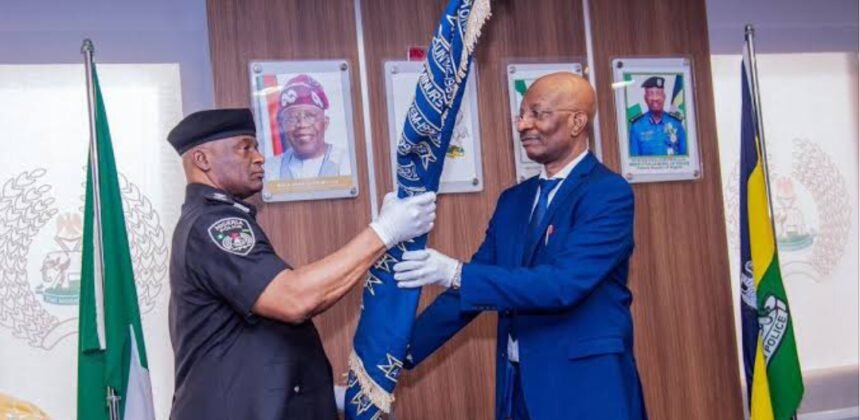
Fresh details have emerged surrounding the resignation of former Inspector-General of Police, Kayode Egbetokun, pointing to alleged administrative lapses, internal disagreements, and operational failures within the Nigeria Police Force.
Sources indicated that several state police commands reportedly did not receive their monthly operational allocations for between six and seven months. The funds, meant to cover logistics, administration, and field operations, were said to have been withheld, significantly affecting the ability of officers to respond effectively to rising insecurity.
President Bola Tinubu was said to have been alarmed by increasing cases of kidnappings, community attacks, and killings in states including Kaduna, Niger, Kwara, Zamfara, Kebbi, and Adamawa. An internal review reportedly uncovered the non-remittance of funds to some commands, a development that allegedly contributed to the directive for Egbetokun to proceed on retirement.
Another issue that reportedly strained relations with the Presidency involved the redeployment of Olatunji Disu. Disu had been tasked with overseeing the withdrawal of police personnel attached to VIPs under the Special Protection Unit (SPU). After he was removed from the unit and replaced by a coursemate of Egbetokun, the Presidency ordered his reinstatement. However, he was subsequently redeployed to the Force Criminal Investigation Department (FCID) in Lagos, a move said to have further escalated tensions.
Egbetokun’s tenure was also reportedly clouded by allegations of misuse of special promotions, with some officers allegedly receiving accelerated advancements without meeting required qualifications, examinations, or years of service. The practice was said to have created dissatisfaction among personnel and disrupted the force’s merit-based promotion structure.
Meanwhile, indications suggest that 39 senior officers, including Deputy Inspectors-General (DIGs) and Assistant Inspectors-General (AIGs) who are senior to Disu, have been lobbying the Presidency, the National Assembly, and the Police Service Commission to retain their positions under the new leadership.
Following Egbetokun’s resignation, Disu was appointed acting Inspector-General of Police. He joined the Nigeria Police Force in May 1992 and holds a bachelor’s degree in English Education from Lagos State University, along with master’s degrees in Public Administration and Criminology, Security, and Legal Psychology.
The Police Council — comprising President Tinubu, the 36 state governors, and the Minister of the Federal Capital Territory — has since unanimously endorsed Disu’s appointment as substantive Inspector-General of Police in line with the provisions of the Police Act 2020. His confirmation marks him as the 23rd Indigenous IGP.
Egbetokun, appointed the 22nd IGP on June 19, 2023, succeeded Alkali Baba, whose tenure ended in September 2023 after an extension granted by former President Muhammadu Buhari.
The developments underscore a period marked by operational challenges and internal friction within the police leadership, culminating in a swift transition at the top of the force.