

The Lagos State Government has officially outlawed manual processing of building permits, mandating all applications to be conducted through its fully automated Electronic Physical Planning Permit System (EPPPS).
This directive, which took effect on April 1, 2026, is part of the administration of Babajide Sanwo-Olu to promote transparency, efficiency, and digital governance across the state.
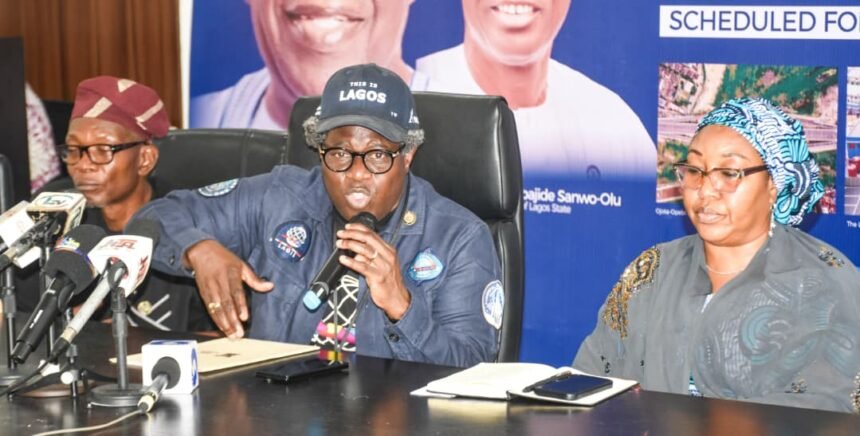
Speaking at a press conference held at the Bagauda Kaltho Press Centre in Alausa, the Special Adviser to the Governor on E-GIS and Urban Development, Olajide Babatunde, said the initiative aims to curb building collapses and improve ease of doing business.
Babatunde stressed that the era of manual permit processing has ended, warning that any attempt to bypass the digital platform would be considered illegal.
“The full automation of our planning permit process commenced on April 1, 2026. Manual processing has been completely discontinued and outlawed. Anyone engaging in such practices is involved in illegal activity,” he said.
He explained that the EPPPS is a web-based platform designed to modernise planning approvals, eliminate bureaucratic bottlenecks, and enhance transparency. According to him, the system is fully operational, with complete staff training and deployment of necessary infrastructure across all district offices.
The government also introduced complementary reforms, including the Certified Accreditor Programme (CAP), a public-private initiative to strengthen building control and reduce structural failures. Additionally, the Lagos State Geographic Information System (LAGIS) Centre and Aumentum Software have been deployed to digitise land administration and improve record management.
Babatunde further disclosed that land administration services are being decentralised, with an operational e-GIS regional office in Ikeja and planned expansions to Lekki, Epe, Badagry, and Ikorodu.
He noted that the integration of the Moola Tracker has significantly simplified mortgage consent processing, reducing the number of steps from 29 to eight without introducing additional costs.
The Special Adviser also announced stricter compliance measures, stating that all buildings in Lagos must now have insurance policies and undergo certification of fitness every five years. He added that safety marshals would soon begin inspections, and contractors must possess proper authorisation before operating on any site.
The Lagos State Government said the reforms are aimed at eliminating inefficiencies, ensuring safer construction practices, and boosting investor confidence in the state’s property sector.