
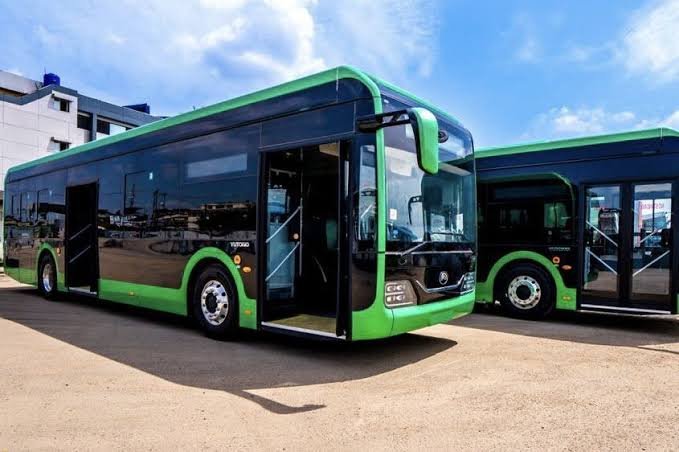
The Lagos State Government has stopped admitting new diesel-powered buses into its regulated public transport system, directing operators to adopt compressed natural gas (CNG) or electric vehicles (EVs).
The policy, which took effect at the beginning of 2026, is part of efforts by the Lagos Metropolitan Area Transport Authority (LAMATA) to transition the state’s regulated bus fleet towards cleaner energy.
LAMATA Managing Director, Abimbola Akinajo, disclosed this while speaking during the handover of 20 additional high-capacity CNG buses to operators under the Presidential Initiative on CNG and EV.
“We will only work with CNG or EV buses, and this has been the policy since the beginning of the year,” Akinajo said.
She clarified that the policy does not mean all existing diesel buses have been immediately banned from Lagos roads. Rather, existing diesel-powered buses will be progressively replaced as the transition continues.
Akinajo said the long-term objective is for the regulated public transport system to move towards electric buses, while CNG vehicles provide an important transition option.
The latest 20 CNG buses will increase the capacity of Lagos’ clean-energy fleet, with some expected to be deployed on high-demand routes, including the Ikorodu-Tafawa Balewa Square corridor. LAMATA already had about 150 CNG buses before the latest addition.
The transition is also being driven by rising operating costs. According to Akinajo, diesel prices have climbed from about ₦950 per litre at the beginning of the year to between ₦1,950 and ₦2,100, depending on the source.
She said the lower operating costs associated with CNG and electric buses were helping the regulated transport system manage the impact without passing the full burden on to commuters.
“Regulated public transport fares have not increased, and these buses have helped us achieve that,” she said.
LAMATA is also working with private-sector partners to expand CNG refuelling infrastructure across Lagos as more operators move towards gas-powered buses.
The development forms part of the wider effort to expand cleaner and more affordable public transportation in Lagos, while gradually reducing dependence on conventional diesel-powered buses.