

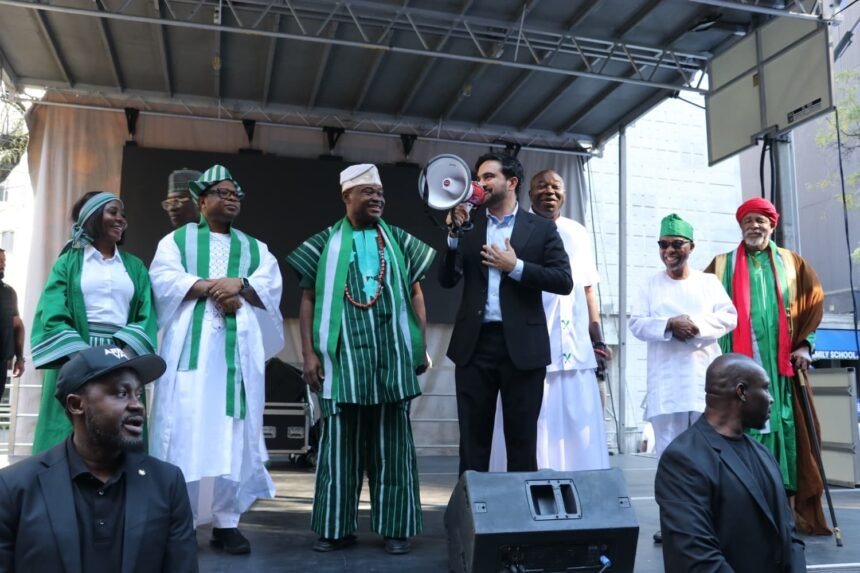
New York City Mayor Zohran Mamdani has praised Nigeria’s growing cultural influence around the world, saying Nigerians have made significant contributions to the life and character of New York.
Mamdani spoke on Saturday at Nigeria’s 66th Independence Day Carnival in New York, where diplomats, community leaders and Nigerians living in the United States gathered to mark the anniversary.
The mayor, who was born in Kampala, Uganda, won applause when he joked about attending the event, saying he did not want to face “wahala” for missing the Nigerian celebration.
Mamdani said he grew up listening to Nigerian music and recalled the influence of Nigerian artistes on his childhood. He specifically mentioned Runtown and Patoranking while expressing excitement about the performances scheduled for the carnival.
He said Nigeria occupies a special place in the identity of Africans at home and in the diaspora, particularly through its music, food and football.
“Being someone who’s proud to be born on the continent of Africa, we all look to Lagos, we all look to Nigeria for a sense of self, a sense of belonging,” Mamdani said.
The mayor also pointed to Nigerian-Americans and people of Nigerian descent as important contributors to New York, citing footballer Folarin Balogun, who was born in Brooklyn to Nigerian parents, as one example.
He said Nigerian culture had become an increasingly visible part of everyday life in the city.
Nigeria’s Consul-General in New York, Abubakar Jidda, congratulated Nigerians across the 20 states covered by the consulate and urged those in the diaspora to contribute their skills, networks and investments to national development.
Jidda said Nigeria’s Independence Day should remind citizens of the sacrifices and vision of the country’s founding generation while encouraging Nigerians abroad to promote peace, unity and prosperity.
Nigeria’s Permanent Representative to the United Nations, Jimoh Ibrahim, said the anniversary should renew the country’s commitment to unity, peace and responsible nation-building.
Ibrahim described Nigerians at home and abroad as central to the country’s international influence, highlighting their contributions as professionals, entrepreneurs, academics and innovators.
He also said Nigeria’s engagement at the United Nations had entered a more active phase, with the country seeking greater visibility and influence on the global stage.