

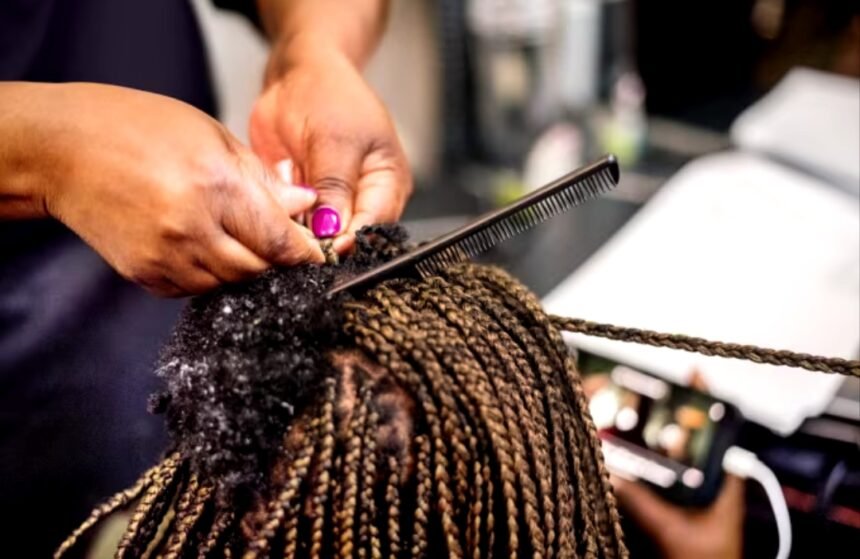
Almost every Black woman or girl has, at some point, worn hair extensions — whether for box braids, twists, faux locs or boho styles. For many, these “protective styles” are a year-round routine to maintain natural hair. For others, they’re a pre-vacation go-to, shielding curls from saltwater and chlorine. Beauty supply stores display rows of extensions in shades like 1B, 27, 30 and 613, ready for installation.
But new research reported by CNN is raising concerns about what may be hidden in those bundles of hair.
A recent study by Consumer Reports found lead in 29 brands of hair extensions. Earlier in February, a peer-reviewed study published in the American Chemical Society’s journal Environment & Health identified dozens of hazardous chemicals in 43 hair samples, including substances linked to cancer, reproductive harm and birth defects. Some samples contained chemicals that would require warning labels under California’s Proposition 65.
While researchers say it is still unclear whether these products directly cause illness, the findings highlight potential risks in a largely unregulated, billion-dollar industry heavily supported by Black women.
Elissia Franklin, a research scientist and analytical chemist at the Silent Spring Institute, led the February study. Franklin, who grew up wearing popular Black hairstyles such as braids and relaxers, said she once experienced rashes after installing extensions. It was during her research on flame retardants in furniture that she realized similar chemicals were present in synthetic hair products.
Her study detected flame retardants, pesticides, organotins — which are linked to skin irritation — and other harmful substances in both synthetic and human hair extensions purchased online and in beauty supply stores. More than 80% of the samples contained chemicals associated with breast cancer, and nearly all tested samples contained at least one hazardous substance.
Despite growing awareness, many braiders and salon owners say business has continued as usual. Some have heard about the reports through social media but say clients have not raised major concerns. Others routinely pre-wash extensions in hot water or soak them in apple cider vinegar to reduce irritation, a common complaint among users.
Irritation, including itching and burning sensations, has long been discussed in natural hair forums. Some women describe scalp redness or discomfort severe enough to remove styles early, even after paying hundreds of dollars and spending hours in the braiding chair.
Hennii Dorsey, co-owner of The Griyn Thumb salon near Atlanta, said she stopped using extensions altogether after experiencing an intense burning sensation that forced her to shave her hair. She noticed some products were labeled “non-flammable,” prompting questions about chemical treatments used during manufacturing. Today, she warns clients about potential risks and refuses to install extensions in her salon.
Researchers say professional braiders may face the highest exposure, as they handle these products daily for years. Franklin argues that responsibility should not fall solely on stylists or consumers but on manufacturers and regulators to ensure product safety.
The concerns extend beyond extensions. Studies have previously found hazardous chemicals in relaxers, gels, glues, edge controls and other hair care products marketed to Black women. Many contain formaldehyde-releasing preservatives and other potentially harmful ingredients.
For many consumers, the question has become not whether risk exists, but how much. Experts say more research is needed to determine long-term health impacts. In the meantime, awareness, ingredient scrutiny and stronger regulation may be key steps toward reducing exposure.
As Franklin noted, everyday products — from food to clothing — carry some level of risk. The challenge, she said, is minimizing unnecessary exposure and demanding safer alternatives.