

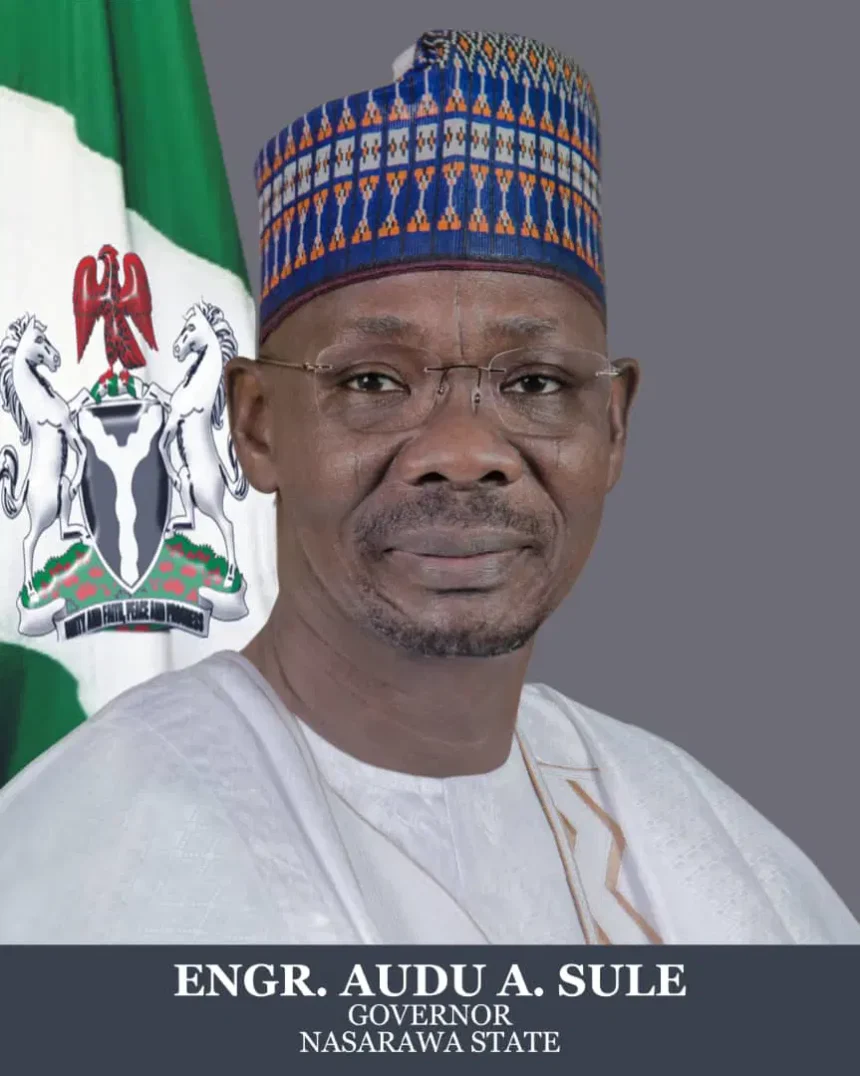
Gov. Abdullahi Sule of Nasarawa State has reaffirmed his administration’s commitment to developing the livestock sector to enhance food security, create jobs and promote economic growth.
Sule gave the assurance at the launch of a book titled “Rediscoveries in Alternative Animal Feed Bioresources”, authored by Prof. Samuel Alu, at the Nasarawa State University, Keffi (NSUK), on Wednesday.
The governor, represented by the Secretary to the State Government (SSG), Mr Labaran Magaji, described the publication as a valuable contribution of scholarship, research and innovation to societal development, particularly livestock production.
He said that the search for sustainable, affordable and readily available alternatives to conventional animal feed had become imperative to the growth of livestock production in the state and the country.
Sule noted that the rising cost of animal feed remained one of the major challenges confronting livestock farmers, with implications for production costs, food availability and the sustainability of the sector.
He commended the author for his research into alternative animal feed bioresources, saying the knowledge contained in the book had the potential to improve livestock nutrition, reduce dependence on expensive conventional feeds and promote sustainable farming practices.
The governor urged researchers, agricultural practitioners, livestock farmers, policymakers, relevant institutions and students to explore and apply the knowledge contained in the publication to improve the economy.
He also commended the university’s management, led by the Vice-Chancellor, Prof. Sa’adatu Liman, for its commitment to academic excellence, manpower development, research and innovation.
Sule said the state government had established the Ministry of Livestock Development as a deliberate policy measure to reposition the sector as a driver of economic growth, food security, employment generation and wealth creation.
He explained that the ministry would provide policy direction, strengthen institutional coordination, attract investment, promote modern livestock practices and create an enabling environment for farmers and other stakeholders.
The governor also reassured the university’s management, staff and students of his administration’s continued support for the institution’s growth and development.
Earlier, Liman said the book was published at a critical time when the rising cost of conventional animal feeds, particularly soybeans and maize, was putting pressure on livestock farmers across Nigeria and Africa.
She said the development was threatening food security and reducing the profitability of livestock farming
Liman commended Alu for exploring unconventional feed resources and presenting them in a scientific and practical manner as viable, cheaper alternatives to conventional animal feeds
In his review, Prof. Demo Kalla, Vice-Chancellor of Taraba State University of Tropical Agriculture, Science, Technology and Climate Action, described the book’s central philosophy as timely and compelling.
Kalla, represented by Prof. Daniel Terhemba, a Professor of Animal Nutrition and Management at Joseph Sarwuan Tarka University, Makurdi, said the book demonstrated how materials regarded as waste could be processed and converted into valuable animal feed resources.
He identified the book’s strengths to include its relevance to the Nigerian agricultural environment, practical orientation, contribution to sustainable livestock production, promotion of research and innovation, and educational value.
In an interview, Alu, a Professor of Animal Nutrition at NSUK, said the book was aimed at creating awareness about cheaper and readily available non-conventional feed materials that livestock farmers could utilise.
He said the 354-page publication, which contains 13 chapters, also seeks to reduce the cost of livestock production by providing information on alternative feed resources.
Alu explained that materials such as mango seed kernels, which were often discarded, could be processed and used as animal feed, thereby creating employment opportunities for youths, women and graduates, particularly in rural communities.
He said the collection and simple processing of such materials through methods like sun-drying could provide alternative feed ingredients to reduce dependence on expensive conventional resources such as maize and soybeans.