

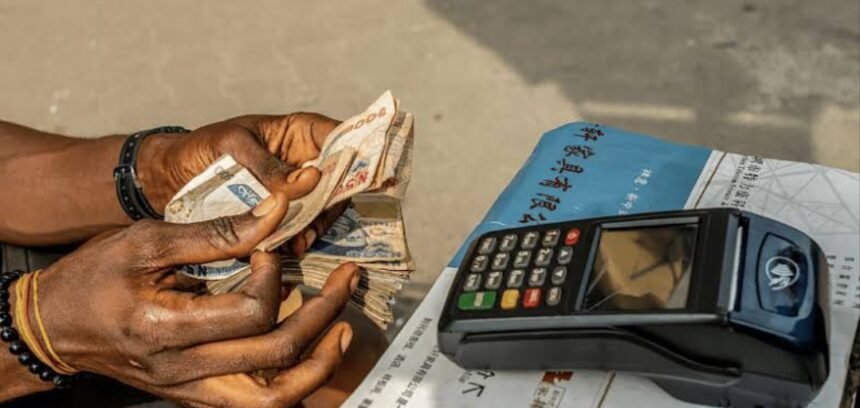
The Central Bank of Nigeria (CBN) has directed all Point of Sale (PoS) operators and payment service providers to establish dual connectivity with the Nigeria Inter-Bank Settlement System (NIBSS) and Unified Payment Services Limited (UPSL) within 30 days, in a bid to curb persistent transaction failures.
The directive, contained in a circular titled PSS/DIR/PUB/CIR/001/002 and signed by Rakiya Yusuf, Director of the Payments System Supervision Department, applies to all acquirers, processors, payment terminal service aggregators and service providers.
According to the apex bank, the policy builds on its September 2024 decision to end reliance on single transaction routing channels, which have repeatedly disrupted Nigeria’s cashless payment ecosystem.
Under the new rules, PoS operators must maintain active connections with both licensed payment terminal service aggregators—NIBSS and UPSL—and configure their systems for automatic failover, enabling seamless switching during outages.
The CBN said the measure is aimed at reducing frequent service disruptions that negatively affect merchants and customers, particularly across the retail and informal sectors.
To strengthen system resilience, NIBSS and UPSL are required to conduct regular tests with financial institutions and report outcomes to the CBN. They must also notify banks in real time of any downtime and submit detailed incident reports to the Payments System Supervision Department within 24 hours, outlining causes and remedial actions.
The 30-day compliance window, which runs until mid-January 2026, adds pressure on an industry that processes millions of daily transactions as Nigeria pushes deeper into digital financial services.
While industry players have largely welcomed the dual-connectivity requirement as a step toward stabilising payment infrastructure, some operators have raised concerns over integration costs and tight timelines. Analysts, however, believe the move could significantly improve transaction success rates and boost public confidence in electronic payments, even as smaller service providers may struggle to meet the deadline.