

The Federal Government has deployed Nigeria’s first standardised justice-sector platform for tracking cases of violence against women, in a move aimed at addressing gaps in Sexual and Gender-Based Violence (SGBV) data, case management and accountability.
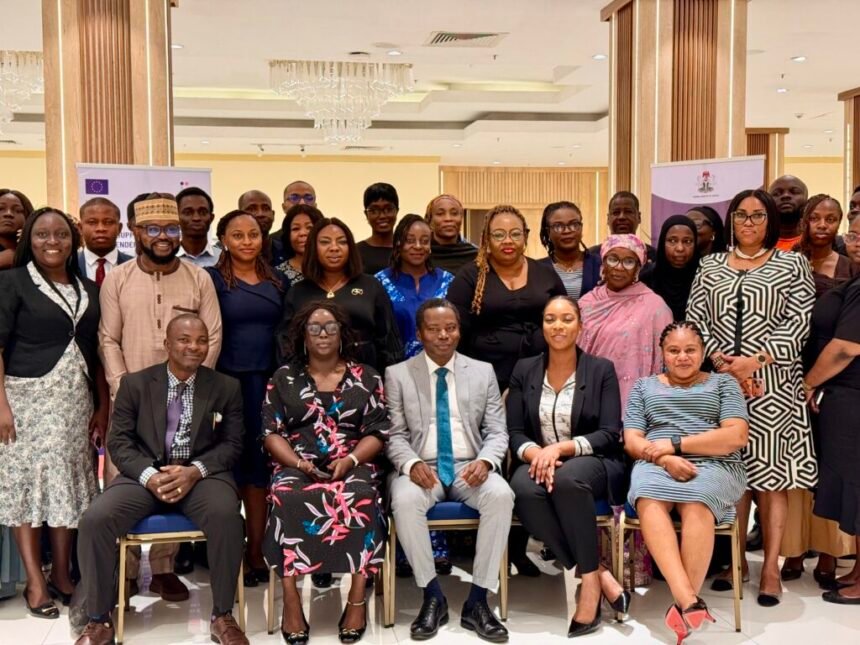
The platform was unveiled during a five-day national validation and capacity-building workshop organised to review reporting tools, strengthen reporting standards and build the capacity of SGBV desk officers.
Developed by the Federal Ministry of Justice with support from the European Union-funded End Sexual and Gender-Based Violence (ESGBV) Programme, implemented by the International Institute for Democracy and Electoral Assistance (International IDEA), the system will track cases from initial reporting through investigation, prosecution and resolution.
Melissa Omene, GBV Policy and Strategy Development Specialist with the ESGBV Programme, said the platform would provide justice institutions with a unified system for monitoring reported cases, prosecutions, convictions and pending matters.
She said Nigeria had made progress in establishing laws and institutions to combat violence against women and girls, but implementation, accountability and monitoring remained major challenges.
Omene said an assessment conducted in the FCT, Benue, Kaduna and Oyo states found fragmented data systems across institutions, making it difficult to obtain a comprehensive national picture of SGBV cases.
She disclosed that the National GBV Dashboard recorded 4,449 cases of gender-based violence in the first half of 2023, while more than 19,000 cases had been documented since the dashboard was launched in 2020.
According to her, only a fraction of reported cases resulted in convictions, while hundreds were closed without resolution and many remained pending or stalled within the justice system.
She said the new platform would enable federal and state ministries of justice to generate standardised and comparable data while monitoring implementation of the Violence Against Persons Prohibition (VAPP) Act and other relevant laws.
National Consultant for the VAW Reporting System at International IDEA, Agharinma Ehiedu, said the platform was designed to eliminate the fragmented approach to collecting data on violence against women across states.
He said the system would provide justice institutions with a centralised view of reported cases, offenders, convictions and pending trials, while also allowing members of the public to report cases for follow-up by the appropriate state desk officers.
Head of the SGBV Unit at the Federal Ministry of Justice, Yewande Gbola-Awopetu, stressed the importance of accurate, complete and timely data in ensuring the success of the platform.
She said inadequate evidence documentation and inconsistent case tracking had continued to hinder successful prosecution of SGBV cases.
Gbola-Awopetu disclosed that the National Human Rights Commission had recorded more than 33,000 SGBV cases between January and May of the reporting year, while the National Agency for the Prohibition of Trafficking in Persons had documented more than 3,000 cases of violence against women in the FCT.
She urged participants to see the training as an investment in the integrity of Nigeria’s national SGBV data and in improving coordination between institutions.
Also speaking, Shirley Atane, Special Assistant on Gender and Vulnerable Persons in the Office of the Attorney-General of Ekiti State, said the state had strengthened its response to gender-based violence through a referral pathway, standard operating procedures and other survivor-protection policies.
She, however, identified inadequate funding as a major challenge, calling for increased budgetary allocations and stronger financial support to ensure that existing laws and policies translate into effective interventions for survivors.