

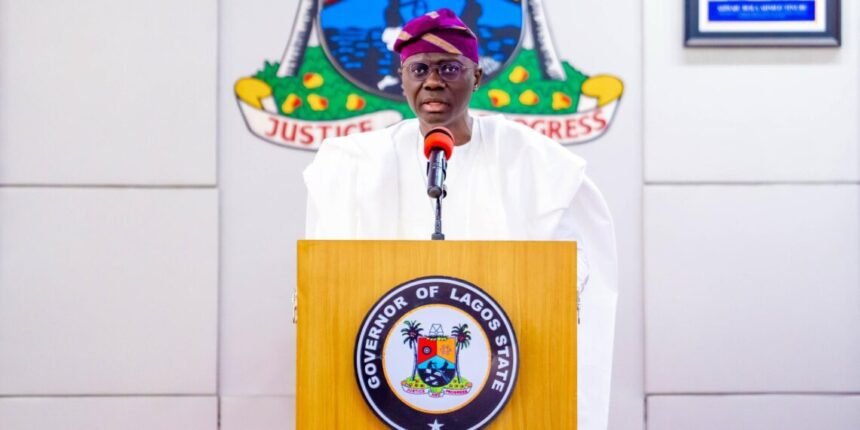
Stakeholders have called for structured leadership development systems and stronger collaboration between state and federal institutions to drive better resource allocation and sustainable growth.
Speaking at the forum, participants emphasised that investments in physical infrastructure must be matched with efforts to build the human capacity required to design, manage, and sustain such projects.
“If we can establish a national infrastructure fund for roads and bridges, then surely we can establish a national framework for building the human infrastructure that will design, manage, and sustain those roads and bridges for generations to come,” a speaker noted.
The Deputy Chief of Staff to the President, Hassan Hadejia, stressed the need for institutions to remain responsive to youth development, noting that young people must be equipped to navigate the complexities of leadership.
According to him, addressing youth development requires deliberate efforts to prepare the next generation for governance and decision-making roles.
Earlier, the Executive Secretary of the Lateef Jakande Leadership Academy, Ayisat Agbaje-Okunade, said the dialogue brought together key stakeholders to explore strategies for building youth leadership for national transformation.
She urged authorities to strengthen institutional alignment and build a broad national consensus around youth empowerment initiatives.
Lagos State has continued to consolidate its position as one of Africa’s leading economic hubs, with its Gross Domestic Product (GDP) estimated at $259 billion based on purchasing power parity (PPP).
This was disclosed during the launch of the Lagos Economic Development Update (LEDU) 2025, which showed that the state’s GDP stood at $259.75 billion in 2023. The report also indicated that the Lagos economy recorded strong growth in the first half of 2024, expanding to N27.38 trillion from N19.65 trillion in 2023.
Nigeria’s internally generated revenue (IGR) performance in 2024 reflects a widening gap between high-earning and low-earning states. While Lagos State, Rivers State, and the Federal Capital Territory remain dominant in subnational revenue generation, several states continue to rely heavily on federal allocations to fund their budgets.
Data indicates that the 36 states and the FCT generated a combined N3.63 trillion in 2024, up from N2.43 trillion in 2023 — representing a 49.69 per cent increase.