
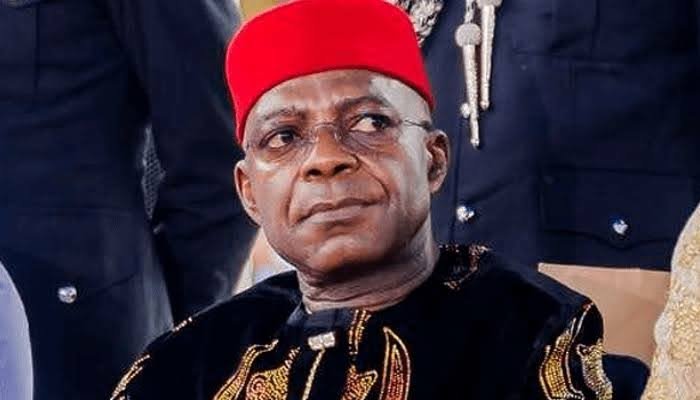
Abia State Governor Alex Otti has defended the removal of petrol and electricity consumption subsidies, saying subsidies encourage inefficiency, waste and corruption.
Otti, who spoke in an exclusive interview with ARISE NEWS anchor Ojy Okpe, said government should prioritise supporting production rather than making consumption cheaper.
“When you subsidise consumption rather than production, you are just subsidising laziness. You are subsidising, sometimes, corruption,” he said.
The governor argued that consumers and businesses tend to use resources more efficiently when they pay for them, adding that reliable electricity would make it unnecessary for businesses to depend on subsidised power.
He said factories and other productive businesses did not need electricity subsidies if government could guarantee constant supply.
“Those people, they really don’t need the subsidy. They just need the constant power supply. And once you’re able to guarantee them constant power supply, they’ll pay,” Otti said.
He also maintained his opposition to petrol subsidies, saying he had consistently supported their removal, including during the COVID-19 pandemic in 2020.
Otti said the removal of petrol subsidy was the right decision despite the initial hardship it caused, arguing that consistent implementation would eventually encourage greater efficiency.
“As election approaches, people will be making all sorts of arguments. But removing the subsidy was the right thing to be done,” he said.
He added that anyone advocating a return of petrol subsidy “does not mean well for the country.”
On his administration’s finances, Otti said Abia had committed between 80 and 82 per cent of its annual budget to capital expenditure over the past three years, while keeping recurrent spending within about 20 per cent.
He said the approach had enabled the state to invest more in roads, hospitals, schools and environmental projects.
Otti also said his administration had reduced Abia’s inherited debt from N191.2 billion in 2023 to about N48.4 billion.
According to him, the inherited obligations included contractor debts, pension arrears and debts to multilateral organisations, with the latter reportedly accounting for about N148 billion.
“We’ve actually reduced that debt to about N48.4 billion. So we’ve taken almost 75 per cent of that loan out; we’ve paid,” he said.