

The Federal Government has announced a 30-day discount on petrol sold at Nigerian National Petroleum Company Limited filling stations nationwide, with public transport operators to receive priority under the arrangement.
The government also disclosed that it was negotiating with stakeholders to establish a ceiling of ₦1,350 per litre on the ex-gantry or landing cost of petrol, in a move aimed at shielding consumers from sharp fluctuations in fuel prices caused by changes in international crude oil prices and the exchange rate.
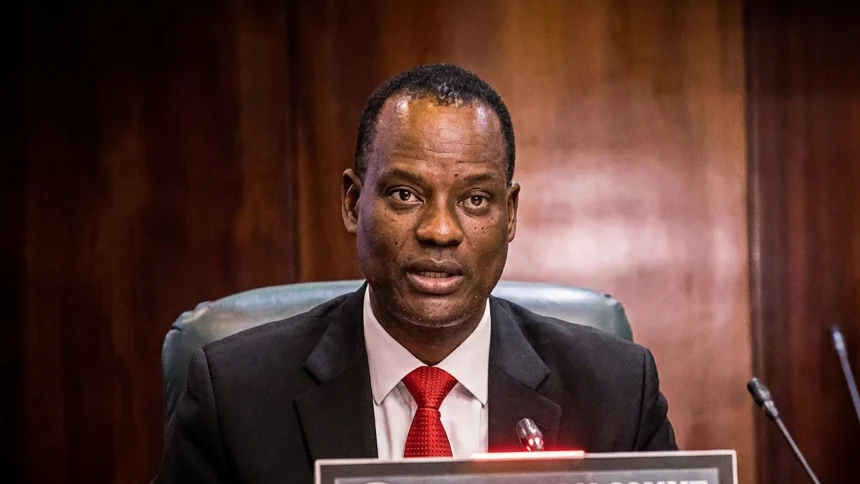
The Minister of Finance and Coordinating Minister of the Economy, Taiwo Oyedele, announced the measures during a press briefing in Abuja on Thursday.
Oyedele said the petrol discount would initially run for 30 days and would be implemented through NNPC stations across the country, with public transporters given priority.
He, however, stressed that the arrangement should not be interpreted as a return to the petrol subsidy regime abolished by the Federal Government in 2023.
According to him, the government’s intention is for NNPC to sell the affected petrol at cost rather than reintroduce a system where government funds are routinely used to keep pump prices below market levels.
The minister said the latest intervention was designed to provide temporary relief to Nigerians, particularly commuters and businesses affected by high transportation and logistics costs.
The government did not disclose the exact value of the new discount at the briefing.
The announcement comes against the backdrop of recent fluctuations in petrol prices. NNPC’s reported pump prices stood at about ₦1,355 per litre in Lagos and Rivers states and ₦1,370 in Abuja.
FG moves to stabilise petrol prices
Beyond the immediate 30-day discount, Oyedele disclosed that the government was working on a longer-term mechanism to moderate fluctuations in the cost of petrol.
Under the proposal, the government is negotiating a ceiling of ₦1,350 per litre for the ex-gantry or landing cost of petrol.
The proposed ceiling applies to the cost of the product before downstream distribution and retail costs are added, meaning it should not automatically be interpreted as a nationwide ₦1,350 pump-price cap.
Oyedele explained that when the actual cost of petrol rises above the agreed ceiling because of higher crude prices or exchange-rate movements, refiners and importers would initially absorb the difference and recover it later when market conditions become more favourable.
He said the objective was to smoothen price movements rather than eliminate them.
“This is neither a subsidy nor a price control; it is designed to smooth prices over time, rather than suppress them,” the minister said.
He added that maintaining a relatively stable price would be preferable to exposing consumers to frequent and sharp increases and reductions.
“₦1,400 today and tomorrow is better than ₦1,500 today and ₦1,300 tomorrow,” Oyedele said.
The proposed ceiling would be reviewed monthly, with adjustments made when necessary. The government also plans to publish the relevant figures to ensure transparency and allow Nigerians to track how the mechanism is working.
The minister said the arrangement was part of broader efforts to reduce the impact of international oil-market volatility and exchange-rate movements on domestic fuel prices.
FG plans forward crude sales to local refiners
Another component of the government’s strategy is the planned sale of crude oil to domestic refiners in advance.
Oyedele said the Federal Government was negotiating forward crude sales to local refiners, although the exact period and pricing mechanism had yet to be determined.
The arrangement, he explained, would provide refiners with greater certainty over their crude supply and help them plan their operations and pricing more effectively.
It would also enable the government to protect its budgetary projections while helping to promote greater stability in the domestic fuel market.
The minister said the government was also working to increase crude oil production, arguing that higher domestic output would help Nigeria take greater advantage of its crude resources and reduce its vulnerability to international market shocks.
At the same time, the government is working with state governments to rein in taxes and levies that add to the cost of fuel distribution, transportation and other economic activities.
Oyedele said efforts were also being made to increase funding for cash transfers to vulnerable households and expand subsidised credit for small businesses and consumers.
The Federal Government is equally working with state governments to accelerate the rollout of compressed natural gas as an alternative to petrol and diesel, particularly in the transportation sector.
The measures are coming amid renewed political debate over the future of petrol subsidies ahead of the 2027 elections.
Opposition presidential hopefuls, including the ADC candidate, Atiku Abubakar, and the NDC candidate, Peter Obi, have indicated that they would restore some form of petrol subsidy if elected.
The Federal Government, however, maintains that it has no intention of returning to the old subsidy regime, insisting that its latest interventions are designed to cushion the impact of high fuel prices while allowing the market-oriented reforms introduced since 2023 to remain in place.
The latest 30-day discount, the proposed ₦1,350 ex-gantry ceiling, forward crude sales and expanded social-support measures therefore represent the government’s latest attempt to balance the competing demands of market reforms, price stability and relief for households and businesses.