

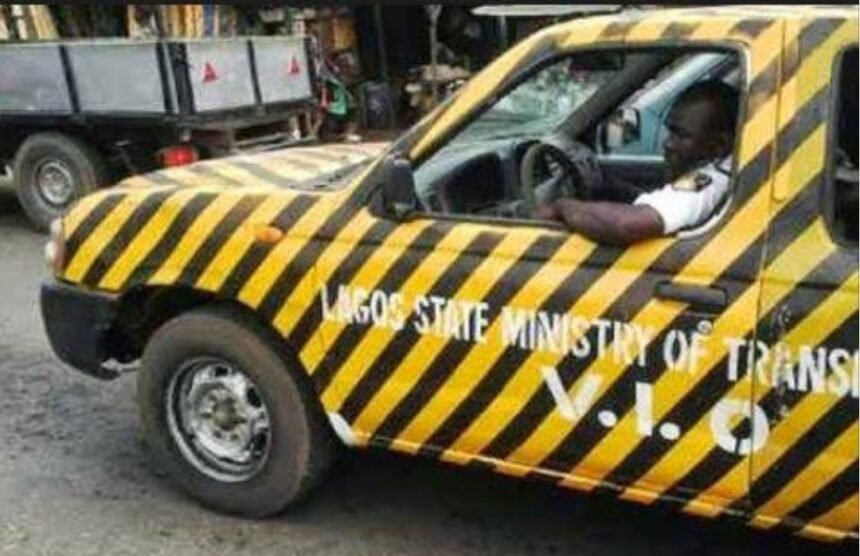
The Lagos State Government has clarified that the recent judgment of the Court of Appeal, Abuja Division, on the powers of Vehicle Inspection Officers (VIOs) does not invalidate the operations of the Lagos State Vehicle Inspection Service (VIS) on roads within the state.
In a press statement issued on Sunday, the said its attention had been drawn to what it described as a viral misrepresentation of the Court of Appeal judgment, which affirmed an earlier decision of the Federal High Court, Abuja, on the illegality of certain VIO enforcement activities in the Federal Capital Territory (FCT), Abuja.
According to the ministry, the judgment arose from a fundamental rights enforcement suit decided in 2025 by of the . The court held that the respondents in the case — including the Director of Road Transport, the Team Leader, Area Commander Jabi, and the Minister of the FCT — lacked statutory powers to stop, impound or confiscate vehicles, or impose fines on motorists in the FCT. The court consequently restrained the VIO from such actions.
The judgment was later upheld by the Court of Appeal.
However, the Lagos State Government stressed that while the judgments are valid, binding and respected, they are not of general or nationwide application. It explained that the decisions bind only the parties to the suit and jurisdictions, such as the FCT, that lack specific statutory provisions empowering VIO operations.
The ministry noted that Nigeria operates a federal system of government, with legislative powers clearly divided between the federal and state governments, adding that vehicle inspection and traffic management fall under residual matters reserved for states.
Unlike the FCT, the statement said, Lagos State has clear statutory backing for VIO operations under the Lagos State Transport Sector Reform Law, which establishes the State Vehicle Inspection Service (VIS) and vests it with powers including vehicle inspection, regulation, roadworthiness certification, pre-registration inspection, and collaboration with other agencies to enforce traffic rules.
The law, the ministry added, also provides for a ticketing system for fines, payable either on the spot where imposed by a mobile court or within 48 hours upon issuance by an authorised officer. Motorists who default are to be charged before a Magistrate or Mobile Court and are entitled to challenge the validity of any ticket in court.
“The process and procedure of enforcement of the powers of VIS officers on Lagos roads are in accordance with the law and not unlawful or unconstitutional,” the ministry stated.
It cautioned members of the public against being misled by what it termed misinterpretations of the court judgments and urged motorists in Lagos to cooperate with VIS officers to avoid sanctions.
The government further assured that all traffic and transport enforcement activities in the state would continue to be carried out strictly in line with the law, with civility, decorum and respect for road users. It warned that any motorist who disobeys or assaults a VIS officer in the lawful performance of duty would be liable to arrest and prosecution.
The statement was signed by Mr. Lawal Pedro, SAN, Honourable Attorney General and Commissioner for Justice, Lagos State.