

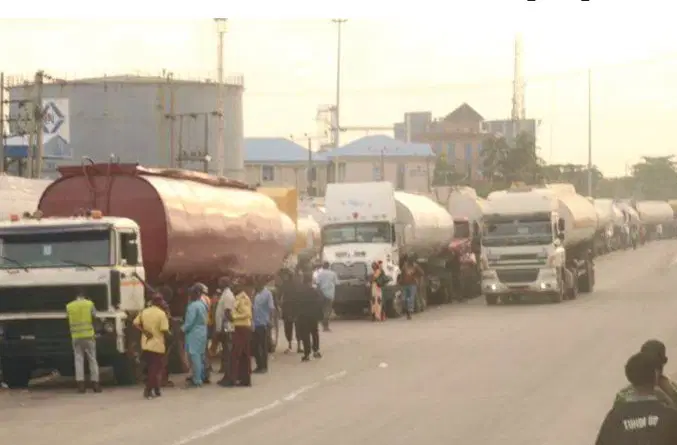
Thousands of commuters and motorists were stranded for hours on Thursday after severe gridlock brought the Oshodi-Apapa Expressway to a standstill, disrupting movement along one of Nigeria’s busiest transport corridors.
The traffic crisis, which affected the Mile 2–Tin Can–Apapa axis and surrounding roads, was caused by long queues of fuel tankers and container trucks, indiscriminate parking, and poor coordination among key stakeholders, including the Nigerian Ports Authority (NPA), tank farm operators, traffic agencies, and security personnel.
The congestion reportedly began when empty tankers waiting to load petroleum products blocked access to major tank farms, preventing loaded trucks from exiting the facilities. The situation was further worsened by an influx of tanker drivers following increased fuel loading activities at depots along the corridor.
Truck owners, customs agents, tanker drivers, and transport unions traded blame over the recurring traffic nightmare, while residents and business operators lamented huge financial losses and hours wasted in traffic.
Traffic Transit Point (TTP), managers of the electronic call-up system, said petroleum tankers are not yet integrated into the platform and therefore should not be blamed on the system.
In response, the Lagos State Traffic Management Authority (LASTMA) deployed additional personnel to clear obstructing trucks and engaged tank farm operators to prevent further blockage of the expressway. The agency warned that violators would face sanctions.
Officials attributed the persistent gridlock to poor coordination, weak enforcement of traffic regulations, indiscriminate parking, and operational activities around the port and tank farms, stressing that only a coordinated effort by all stakeholders can provide a lasting solution.